Once, in junior high, in that typical, foolish, heartbreaking way we all seem to have of discovering the truth about our true love’s feelings, my best friend asked the boy of my dreams if he liked me.
“Well, kind of,” he said, “but she’s kind of, you know, different?”
I was crushed. It was, after all, junior high, and I wanted to fit in. Flash forward twenty years, and I’m breaking up with my boyfriend. He’s apparently still in junior high and feels a need to hurt me in as many ways as possibly during our final discussion.
But he’s unsuccessful, in part because he starts out with this: “you’re kind of offbeat, you know? Different?”
Nailed it, possibly for the first time in our relationship. Finally seemed to show some sort of understanding of who I am. A little offbeat, beat of a different drummer, all that.
Except as one wise man once told me, everyone who’s anti-establishment is anti-establishment in the same way, and the same holds true with being offbeat. It’s not as different as all that. It’s just another way of being in this world.
It’s taken me a long time to finally appreciate that with all my quirks, my social faux pas, my awkward moments — and those are bountiful — I’m still at heart someone who offers more than she takes, and that is immensely valuable in today’s world.
My friends like me for all of quirks, qualities and goofy ways. They like me despite my screw ups and because of my kind heart and sense of humor. They are quality people, so I’ve begun to see myself as one, too.
You are known by the company you keep, and you know who your friends are when trouble washes over you. My friends have proven my best qualities, time and again.
One of my blogging buddies, Deb, has a daily grateful post. It’s encouraging to read all she is grateful for, and while I don’t plan to copy her idea on a daily basis, today I’m saying, loud and clear, I’m grateful for all the choices I have in my life.
I can choose when I wake up in the morning, and when I go to bed at night. Yes, work and other obligations influence those choices, but the final decision is up to me. If I decide to stay up late to finish a captivating book, no one is going to challenge me.
After I wake up, I can choose what I eat for breakfast and what I’m going to wear that day. Okay, work has this bizarre dress code — I have to wear black, white or grey — but outside of work, I can wear what I want to (well, some choices might get me arrested, but those aren’t my choices, anyway). I get to decide whether or not I want to wash my hair or work with what I’ve got.
My car, my precious little Prius, was my choice. The color was not — but I’m happy with it.
When I knit, I can choose what pattern I want to make and what yarn I want to use. There are more patterns out there that I like than I’ll ever be able to complete, and I’m grateful for that, as well. In theory, I can’t knit something I won’t like (nice theory, not always a reality!). But the abundance of beautiful patterns and even more beautiful yarns is awe-inspiring. And just plain inspiring.
Look at the multitude of blogs on WordPress alone — we have our choices of themes, and our choice of what to do with those themes once we choose the one that suits us best. We can easily switch to another, and no one can stop us.
We can write about what we choose, and a lot of what we write about involves choices we have.
Best of all, I can choose how I will respond to all of life’s situations. It makes me who am I today and shapes who I will be tomorrow.
Over time I’ve learned from my previous choices, everything from what makeup looks best on me to what will truly bring me happiness in life. I’m grateful for the lessons learned from those choices, and for a life I can make better with stronger decisions.
I’ve listed basic choices here, but we all have simple and challenging decisions to make on a regular basis. When you get bogged down with having to choose, think of what a blessing the opportunity to decide for yourself is in this world.
Life isn’t easy, but it gets better. So do my choices.
Images courtesy of Pixabay. Thank you, Pixabay, for all the choices you offer, at no charge!
About this time six years ago, I had a peculiar, eerie dream that shook me to the core. There was no clear message, no strange story to recount, but the imagery was so strong I looked it up in a book on the meaning of dreams.
There were four elements to the dream, and I’m not clear on all of them anymore, but they included a wolf wearing a mask, dancing in darkness on the edge of a road that disappeared in the distance. Dancing isn’t quite the right word. Cavorting better describes what was going on, and it felt evil.
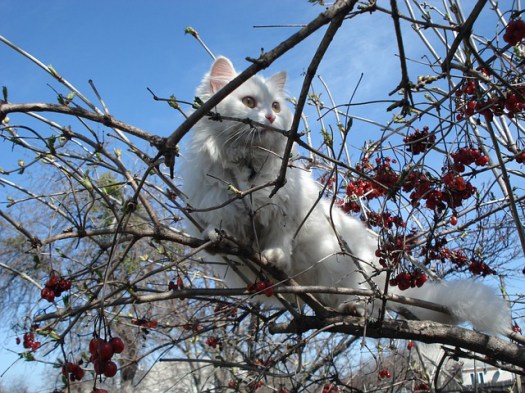
On the side of the road were some tiny white flowers, nearly glowing in the darkness.
I was frightened.
Wolves themselves don’t frighten me; while I may not wish to walk up to one and scratch him behind the ears (I have respect for their wild nature), I think they are beautiful, almost romantic creatures. My admiration of wolves began when I was very young, and my parents received an album they really didn’t want from the Columbia Record of the Month club . That club sent you a notice of the record of the month, and would send that album to you if you didn’t return the card saying you didn’t want it. We ended up with a few odd choices in the family record collection that way.
You could return the unwanted selection, but that was a hassle, especially when both parents work and the kids are always underfoot. This particular month’s record was “The Language and Music of the Wolves,” narrated by Robert Redford. It was 1967, and he was just hitting it big, but I’d never heard of him. I couldn’t understand why they didn’t get someone famous to narrate the tale of the wolves.
For us kids, the chief value of that album was the B side, which had recordings of the wolves howling. It was great for Halloween. It wasn’t until years, decades, really, later, that I realized that album had done its work. I appreciated wolves.
I say that to help make it clear in part why an evil wolf would be so disturbing to me. Aside from Little Red Riding Hood, that wasn’t part of how I pictured them. This masked invader into my subconscious seemed to be bringing me a message, something I don’t typically find in my dreams, but I couldn’t shake it.
According to the dream interpretation book, the meaning was clear. All four elements, each in its own way, pointed to the same thing. Someone I trusted was going to betray me.
I was shaken, but didn’t believe it. I talked to my co-workers about it, people I absolutely did trust and knew would not turn against me. (They didn’t.) We mulled over the possibilities of what my dream might specifically mean, and eventually, I laughed if off.
Two months later I wasn’t laughing.
A man who I not only believed in, but supported against the beliefs and words of others because he had always treated me properly, turned on me and accused me doing something I simply didn’t do. The proof of my innocence was strong, concrete, even, but in the end, it didn’t matter.
No, that isn’t completely true. It mattered to those who mattered to me, who knew me best, who believed in me regardless of what was said and where it was said. The police believed me and didn’t trust the information they were given by that man in the beginning; they recognized the inconsistencies in both his statements and my behavior.
But I paid a price. A very high price.
There’s one part of the dream that didn’t mean betrayal, but rather, hope. The white flowers. I clung to that imagery in my darkest moments and never lost hope and faith in the future.
The future is continuing to roll out, and the hope and faith are finding their fulfillment.
The next wolf I see in my dreams is going to be beautiful.
In July 1999, while in New York for my brother’s wedding, my aunt & I stopped to shop in the World Trade Center. She pushed for the $20 elevator ride to the top, but I balked.
“I’m scared of heights,” I admitted. “I mean, it’s not like I think I’m going to fall off the building if we go up there, but I’d be too terrified to enjoy it.”
“Once you’ve had brain surgery,” she replied, referring to a tumor she’d had removed a few years earlier, “nothing scares you.”
As I stared at the Twin Towers, I hoped she’d never endure nothing more frightening than that growth in her brain. Sadly, that wasn’t the case, as her health problems dwindled in comparison to events the following May. Her son, my cousin, went missing, and has never been found. He is presumed to have been murdered.
And of course, just two years later, those buildings we shopped under and gazed upon collapsed under the force and heat of two jet airplanes that had deliberately been flown at horrific speed straight into them.
I don’t live in fear of events like those on a daily basis, although clearly they can and do happen, but living without the awareness and respect for what life can bring you on any scale seems foolhardy.
Is fear holding you back is a legitimate question, but one that should be coupled with, is that fear a safety measure or a roadblock? If you aren’t pursuing your dreams because the risk greatly outweighs the reward, then consider the fear a gift. Not all dreams are golden opportunities waiting for you to have the courage to make them come true. Some are escapist fantasies with little basis in reality.
Now what?
At different points in our life, when our responsibilities shift and change, we have a greater or lesser tolerance for risk. Some of us, quite frankly, aren’t good at “jumping off cliffs.” There needs to be some stability in our decisions or we fall apart before the outcome of our decision is determined.
Others thrive on risk, the fear is a motivator, a fuel that sends them from one adventure to another.
We all land somewhere on a tolerance spectrum of risk vs. reward, and as appealing as the phrase “let go of your fears” may be, not all of us should do just that. Our fears can be our friend, not because they rule us, but because they guide us.
Respect yourself, respect your fears, but respect the proper opportunities before they go by, as well. Life is a balancing act.
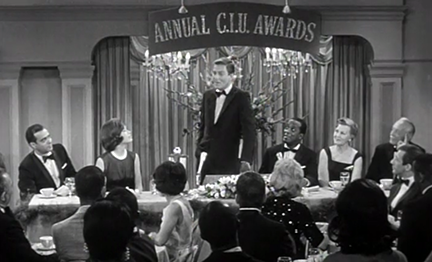
A 1965 episode of The Dick Van Dyke Show shows Rob Petrie (Dick Van Dyke) and his wife Laura (Mary Tyler Moore) accepting an award on behalf of Rob’s boss, Alan Brady (Carl Reiner). The award, given by the fictitious Committee for Interracial Understanding, is for Alan Brady’s contributions to understanding and honesty between the black and white communities.
Mary Tyler Moore, Dick Van Dyke, Joel Fluellen
One sentence in Rob’s acceptance speech gets to me. “It seems to me understanding should be as natural as breathing,” he says. “And you don’t get awards for breathing.”
Understanding in the racial divide is hard work. I’ll be the first to say, I don’t get it, I don’t get what it’s like to be black in America. I’m white, I grew up in an almost exclusively white neighborhood and school district, although as an adult, I entered into much more diverse scenarios.
I have two things going for me in my desire to bridge the gap (well, hopefully more than that, but we’ll start with these two): I was raised in the 60s by parents who believed God made everyone equal, but fully recognized life didn’t treat them that way, and as an adult, I frequently worked with and/or lived in diverse neighborhoods that helped me be at ease with people of numerous ethnic backgrounds.
My high school. Photo c Mike24.
There was a small amount of interracial contact throughout my teenage years. In high school, out of approximately 2,400 students, only one, Tony, was black. Tony moved to my town in his junior year to live with his mom, and a year later, moved back to stay with his dad, where he could go to a school that was significantly more diverse. I was the same age as Tony, and he ended up going to my church, so I got to know him fairly well, in particular because he became close to one of my best friends.
When Tony moved, he didn’t tell too many people he was leaving, so we didn’t get to say good-bye. He did talk to my best friend, Carolee, and she told me he didn’t want a lot of fuss. You see, Tony was incredibly popular, wonderfully talented and in demand socially. He knew we wouldn’t understand why he would want to move to a small town in the middle of nowhere with a K-12 school that had fewer than 400 students. After all, our school ruled.
I didn’t understand. We liked him, and we treated him in the manner you treat someone you like. What I couldn’t see, couldn’t feel and didn’t live was the disconnect between the races, the incredible alone feeling Tony no doubt felt every day walking down the halls of our high school. I knew a lot of the girls stared at him because he was good-looking, but there was no way for him to differentiate between those looks and the stares that came because he was black. For that matter, a lot of girls probably stared because he was good-looking and black. That, I’m willing to wager, is a different look. The element of the forbidden, the socially questionable to a teenager is, well, what makes a simple crush a great romance.
At the church Tony and I attended, there were a handful of black families. Three of those families were related; the husbands/fathers were brothers, all very close in age. They also looked like they could have been identical triplets. Ever the blunt one, I asked my friend Alethea (also black) if it was a problem I couldn’t tell them apart. Did all black men look alike to me?
No, Alethea assured me, she’d known the family for years and the easiest way for her to tell these three men apart was through their wives. The wives were easy to distinguish. So I, too, got to know the families through the wives, as well as their children, who were all under the age of five.
Candy Stripers — a little before my time, but you get the picture.
At the same time I was working as a candy-striper at the local hospital. In case you don’t know, “candy-striper” is the nickname for volunteers who wear a red-and-white striped pinafore, white blouse, and in my case, white ankle socks and white tennis shoes. I worked Sunday afternoons, and the nature of that shift meant we spent a lot of time in the maternity ward.
One of the families I spoke of above had just had a baby. I was walking through the infant viewing area, and the man I thought was the new father was standing there, admiring the newborn, a thoughtful, musing look on his face.
“Congratulations!” I said. “I heard in church this morning you had a daughter.”
“Oh, it’s my niece,” he said. “It’s my brother’s baby girl.”
“I’m so sorry,” I apologized. “I’m always getting you and your brothers mixed up.”
“Everyone does,” he said, smiling.
“Belinda!” my fellow candy-striper, Karen, hissed at me as we walked down the hall. “I can’t believe you didn’t know he wasn’t the father!! He goes to your church!”
“Oh, it’s okay,” I replied. “They’re brothers. They all look alike.”
From down the hall I heard a deep, full-throated burst of laughter. I have no doubt that story was told time and time again in their family. I hope I came across as the girl I think I was: nice, kind, perhaps a little naïve and (please, please) not racist. Well, the story would be better that way, so maybe I did.
Was I ignorant? In many ways, yes. I simply didn’t understand.
No matter how funny that man and his family may have found the story, and I hope they did laugh, the underlying issue isn’t funny. Was I ignorant about racial issues? In many practical ways, yes. I simply didn’t understand. If you were black or any other minority and I was your friend, if I treated you as well (or poorly) as any of my other friends, what was the problem between us? If you were a complete stranger I passed in the store, a customer in my teller line at the bank, a sales associate at the cosmetics counter where I bought eye shadow, why would there be a racial problem if I spoke to you with respect and dignity? And yet, there was. I just didn’t always know it.
An offhand remark might be misinterpreted. That isn’t exclusively a racial issue, that’s human communication. Some of it is regional; terms that mean one thing in California have an entirely different connotation in Minnesota or Arkansas. I learned not to use the phrase, “jerk someone around.” In some parts of the country, it means to treat another person poorly, in other parts, it’s a very sexual expression. I had a hard time keeping it straight.
Some of it is coming into the middle of a conversation and hearing a phrase out of context. I’ll never forget when, in my late teens, one of my friends and I were talking about a third friend’s abusive relationship. Gina, the one I was talking to, was a literature major, and would use literary terms in everyday conversation (which drove us crazy), including the word “dark” to describe anything bad or evil.
We were waiting to be seated in a crowded restaurant, and there were two hostesses, one white, one black. Our name was called, and as we approached the hostesses, Gina, referring to our friend’s situation, was saying, “she needs to throw that dark dog in the river.”
Both young women tensed up. Gina, feeling passionate about our friend’s plight, was only making things worse. I don’t recall the rest of what she said clearly enough to recreate it, but it did sound bad out of context. I was uncomfortable and didn’t know what to say without further digging a hole.
Our waitress had no problem with it. Young and brassy, she, perhaps inappropriately, confronted Gina about the term “dark dog” as well as the rest of her rant.
Image c RetroClipArt — Adobe Stock
“Did you mean a dog, or a black man?” she asked. “Because this is a nice restaurant, and we don’t tolerate bigots or puppy killers. Those girls,” she pointed to the hostesses, who were out of hearing distance, “are my friends, and they were offended. I just want to know why.”
Now I was incensed. “We were talking about a friend’s boyfriend,” I said sharply (and loudly). “Her white boyfriend.” That didn’t sound so good to surrounding diners, either.
Gina was perplexed. “Come on,” I said, “let’s go.” We left, both upset and confused. We weren’t racist, surely not?
I stopped telling that story after several people told me Gina’s statements actually were racist and we didn’t realize it. I’ve struggled with that one. So much of our language is indeed subtly racist, under the radar and pervasive. It is perhaps the most difficult to challenge and change. Gina, a typical college student, was under the spell of all she was learning. I’m willing to bet she was showing off more than putting down by using the word “dark.”
Jean Adair, Josephine Hull in “Arsenic and Old Lace.”
Is the term “dark comedy” racist? I do not know. I use it to describe movies such as “Arsenic and Old Lace,” in which two elderly ladies kill off their gentleman callers and bury them in the cellar, hence the darkness in the comedy, and I’m far from the only one to do so. I don’t even know what the racial connotation would be in the term (I get the correlation between “dark” and “black,” but it’s the further definition I’m unclear on). Maybe that’s the problem. I don’t know.
We are all equal in God’s eyes, but we do not live in a society that treats us that way, and our view of ourselves and our world is shaped in part by how we’re treated. Several years ago I attended an annual statewide convention for people who, like myself, worked with others with developmental disabilities. The keynote speaker was a woman who was black and in a wheelchair. I don’t know what her disability was, but I surmised it had been lifelong.
“When people ask me how I identify myself, as disabled, black or female,” she said as she summed up her talk, “I tell them I identify myself first as African-American, than as a woman, than, as a black woman with a disability.”
That was an eye-opener. I gained a much greater understanding about why the phrase, “I don’t even see [name of black friend] as black anymore. He’s just [name]” is so degrading. I had long ago realized how bogus it was to say that. If you can see, you see another’s race. What I hadn’t realized was if you’re black, it’s part of your identity. An essential part. If you’re white, it rarely is a significant part of the equation of identity.
When a white person says they don’t see race, they mean, “I’m not adding something to our relationship that would separate you from me.” As I understand it, if you’re black, you’re hearing, “I’m acceptable if I deny an essential part of who I am.” There’s a huge discrepancy in meaning there, and a cartful of issues to sort through.
I’m always timid about adding my comments. Will some barely disguised ignorance show through?
I have several blogging friends who are black, and I follow their blogs and interact with them because I like them. Some of them address race more frequently than others, and I’m always timid about adding my comments to their posts. Will some hidden arrogance, some barely disguised ignorance show through? I’ve had some people reply sharply to my comments, but fortunately, I’ve been smart enough to respond and try to work through any misunderstandings or subtle feelings of whatever I may be expressing.
I’m acutely aware of the danger of sounding condescending. Plus, when you’re leaving a comment on a blog, the context of Who I Am isn’t there. If you haven’t interacted with me, all you have is my little profile picture, little white me in my pink blouse, to give you any insight into who I am.
Image c RetroClipArt — Adobe Stock
I can never fully understand the black experience. I want to be open, empathetic and supportive of all races and other minorities. Even as I write that, I’m reminded I was chastised once for using the term “races” synonymously with “minorities.” I felt like I couldn’t win, although I did have a decent discussion with that blogger.
I’m reminded of Rodney King, victim of terrible racial abuse, who, after his ordeal had been addressed by the courts and the public, said, “Can’t we all get along?” Some people mocked him for saying it, some called it simplistic and even foolish. I don’t want to brush over the evil or painful, but I do want us all to get along.
I know it isn’t that easy.
I’m asking my black friends to bear with me. I sincerely want to do better. I’m asking my white friends to seek understanding. For that matter, we should all seek understanding. The learning and growth are a strengthening process for all of us.
This is a turbulent time for our country, but it’s also a time of opportunity. I hope someday understanding is, indeed, as natural as breathing.
As the man said, you don’t get awards for breathing.

 faux pas, my awkward moments — and those are bountiful — I’m still at heart someone who offers more than she takes, and that is immensely valuable in today’s world.

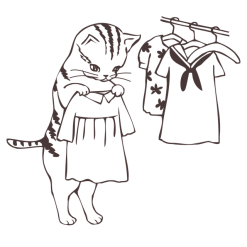 After I wake up, I can choose what I eat for breakfast and what I’m going to wear that day. Okay, work has this bizarre dress code — I have to wear black, white or grey — but outside of work, I can wear what I want to (well, some choices might get me arrested, but those aren’t my choices, anyway). I get to decide whether or not I want to wash my hair or work with what I’ve got.
 make and what yarn I want to use. There are more patterns out there that I like than I’ll ever be able to complete, and I’m grateful for that, as well. In theory, I can’t knit something I won’t like (nice theory, not always a reality!). But the abundance of beautiful patterns and even more beautiful yarns is awe-inspiring. And just plain inspiring.
 We can write about what we choose, and a lot of what we write about involves choices we have.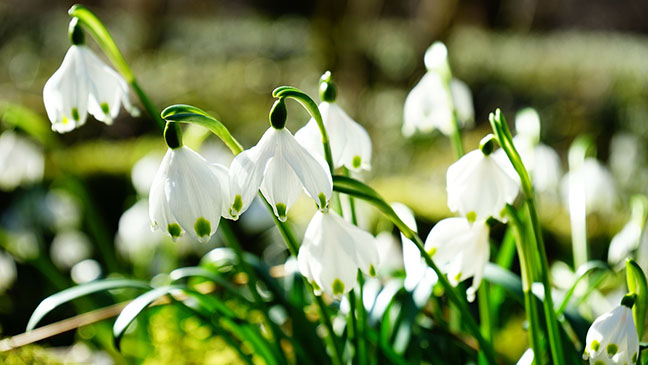
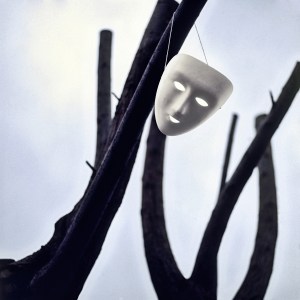 There were four elements to the dream, and I’m not clear on all of them anymore, but they included a wolf wearing a mask, dancing in darkness on the edge of a road that disappeared in the distance. Dancing isn’t quite the right word. Cavorting better describes what was going on, and it felt evil.
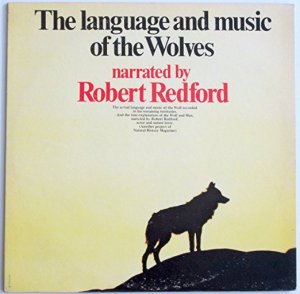 You could return the unwanted selection, but that was a hassle, especially when both parents work and the kids are always underfoot. This particular month’s record was “The Language and Music of the Wolves,” narrated by Robert Redford. It was 1967, and he was just hitting it big, but I’d never heard of him. I couldn’t understand why they didn’t get someone famous to narrate the tale of the wolves.
 There’s one part of the dream that didn’t mean betrayal, but rather, hope. The white flowers. I clung to that imagery in my darkest moments and never lost hope and faith in the future.




 My World With Words
You must be logged in to post a comment.