Every once in awhile there is a break from the agony of lonely days, the pain of endless nights.
It might be the grumpy baby who looks at you and smiles. The friend who brings over some light bulbs she had in her closet; they don’t fit anything in her home, but would they work for that overhead fan you have? You’ve put off buying anymore of those bulbs because they burn out so quickly, yet these, these work…that room is no longer dark.
Perhaps, if you’re lucky, it’s a major break, something that will change the tide.
A friend of mine has been battling obesity for a long time now.
It’s affecting her in a multitude of ways, physically and emotionally. Recently she made the difficult decision to address her problem surgically. That means a series of tests before the surgeon would consider her case, including a psychiatric examination.
The conclusion? She wasn’t a suitable candidate.
She was deeply disappointed, but still determined to fight her battle with her weight. However, she wanted to address the issue of her mental or emotional health one more time, so she went back to the psychiatrist who had made the diagnosis.
Turns out, it was a clerical error and didn’t reflect the psychiatrist’s opinion one bit. In fact, my friend is considered to be someone with a high level of probability for success, both short- and long-term.
What she came to realize through all of this was the bitter treatment people with mental illness face. After this mistake was made but before the error was discovered, she found herself being treated harshly by the staff who once were so kind to her. When her chart was corrected, they returned to their friendly behavior.
It reminded me of a close friend’s experience with bigotry after she had a liver transplant. Nurses and others on the hospital staff were abrupt and, on occasion, downright rude. Finally, she asked her doctor to please note her transplant was necessary due to an auto-immune disorder, not because of substance abuse. The doctor wrote AUTOIMMUNE DISEASE in big letters on her chart, and the staff turned around in their judgmental attitudes. Jean was disgusted.
Mental health and substance abuse remain stigmatized in our society,
even among medical professionals who should know better. They presumably have accurate information about the nature of these diseases, and after all, haven’t they committed themselves to a profession of compassion and empathy?
It brings me back to singing a familiar tune: you don’t know what you don’t know. It’s easy, and convenient, to judge another’s behavior. It gives us a feeling of control.
But it’s dangerous, and a crutch for the foolish.
I respect those who are gracious enough to give those with mental illness the room they need to deal with their disease. One of my closest friends has two sisters diagnosed with bipolar disorder, at different levels of severity. The oldest sister has a difficult time functioning in society. With the help of family, she’s chosen to live in a halfway house in a remote area.
The other sister, after years of destructive living, was able to get a handle on her disease and maintain both a job for herself and a home for her son. About every seven years, however, she had a severe relapse. Her son would live his with father during that time, and her employer would give her a leave of absence for as long as she needed it.
The time came when that company was sold, and she decided to apply for disability, knowing that odds were another employer wouldn’t be as kind about her mental health. The courts agreed, and at the age of 56, she was granted disability. She still makes a valuable contribution to society through volunteer work, and her son is healthy, happy and completely supportive of his mother.
Her volunteer work is with mental health awareness, and people listen to her. How they apply what she has to say in their own lives is, of course, an unknown, but we can only hope they open their hearts and listen to what is unsaid.
Because we are often best understood by what is unsaid.
At times I feel as though I’m spinning a bit too fast.
Not out of control, per se. Haven’t gotten there lately. But I need to step back and slow down, stop spinning. It’s not a new problem. The decades change how we spend our time, but not the impact of overload.
I need balance. While I couldn’t find statistics on how adults spent their time decades back, there was plenty about teens. So I’m taking my cue from the younger generation, then and now, to help me find peace of mind in my time today.
Be Real. Only in Peggy Sue’s dreams was she playing records with the hunk from algebra class.
Back in 1960, the average teenage girl spent 2-1/2 hours a day listening to the radio, and another two hours playing records. She spent less than an hour a day watching TV, a statistic that is a little misleading, since not all American homes, or homes anywhere in the world, had television sets. And remember, for the vast majority of homes that did have TV, there was one set for the whole family. No computers, no smart phones, just the one screen for all to share.
I’m betting the average teenage girl spent a fair amount of time on the phone, as well, until her parents told her she had to hang up because Aunt Patty might be calling about Sylvia’s baby. One phone in most homes, and no voice mail.
Today’s teenager averages more than nine hours a day in screen time, and he or she is beat out in that statistic by the adults. Of course, that includes school, homework or work time on the computer, as well as productive time spent in creative pursuits (like writing a blog). There are few statistics on the breakdown of that screen time, in other words, what can be considered productive and what is not.
Never one for sports, not I…
Interestingly, a study done in 2004 showed that teens in 1981 spent less time in school, studying, helping around the house and socializing (structured events) than their peers at the start of the 21st century. They did spend far more time out of doors and playing sports. They also had more down time (how that was spent is not well accounted for in this study).
Friends of mine have two bright, active teenage girls, and those young ladies are going at top speed from dawn to dusk and many hours beyond. Their dad told me once that statistically, girls who are involved in sports are less likely to get pregnant (well, yeah, their periods tend to stop, but I didn’t say that to him). So they never stop running, and I darn near mean that literally.
I wonder, sometimes, if that kind of busyness has a dark side. I know I desperately need my alone time, and as I recall, it was crucial to my adolescent development that I find time to process whatever was going on in my life and my mind.
Down time is different these days. I get nostalgic for some things. There’s something about playing records, with the discs steadily going ’round and ’round, the music that speaks to you playing as many times as you need it, that seems comforting to me. I know, there are a multitude of ways to wallow in music these days. But the record player had a soothing quality to it, and actively having to change records seems somehow a fair exchange of labor and reward.
I’m not criticizing computers, smart phones, televisions and the like. I depend on them. But reflecting on how teens spent their time in decades past gives me some insight into what might help me relax and regroup today. There are moments when I have to close the computer; I cannot look at one more message, perform one more search, post one more anything. What do I do then?
How do I regain my sanity, my ability to face what’s coming at me next?
I didn’t find my answer in all those statistics, but the search led me to what I needed to know in a different way. I started to think of things I could do that were timeless, that sort of activity my parents, grandparents and ancestors decades back perhaps took part in.
I need to step out of the present. I need to return to what brings me peace.
Pondering the eternal, reflecting on the past.
Escaping to what never was and never will be.
Finding the strength to go forward with the present.




 It reminded me of a close friend’s experience with bigotry after she had a liver transplant. Nurses and others on the hospital staff were abrupt and, on occasion, downright rude. Finally, she asked her doctor to please note her transplant was necessary due to an auto-immune disorder, not because of substance abuse. The doctor wrote AUTOIMMUNE DISEASE in big letters on her chart, and the staff turned around in their judgmental attitudes. Jean was disgusted.
 I respect those who are gracious enough to give those with mental illness the room they need to deal with their disease. One of my closest friends has two sisters diagnosed with bipolar disorder, at different levels of severity. The oldest sister has a difficult time functioning in society. With the help of family, she’s chosen to live in a halfway house in a remote area.



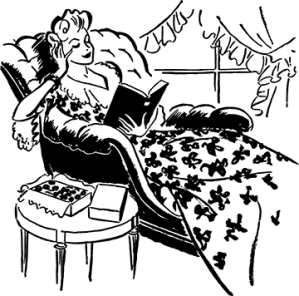 I didn’t find my answer in all those statistics, but the search led me to what I needed to know in a different way. I started to think of things I could do that were timeless, that sort of activity my parents, grandparents and ancestors decades back perhaps took part in.
 My World With Words
You must be logged in to post a comment.