For those of you who’ve seen this post already, thank you for your loyalty! It’s been a year and a half since I first posted it, and some of you are still here! You may enjoy seeing it again, and for some of you, it’s new — and timely.
Enjoy the game tomorrow!
So you’ve been invited to a friend’s house to watch the football game on their ginormous TV. Everyone is going, and you don’t feel like sitting at home alone.
I’ll never be an expert, by any definition, of any sport, but I do have some expertise in pretending to care.
First, a little insight into my own level of knowledge of the game of football, and then a few tips for getting through enjoying the game, or at least letting your friends think you do:
Some years ago,
I was late for my first date with a man who ended up being my boyfriend for an eternity. “I’m so sorry,” I said as I sidled up next to him at the bar (classy date, huh?). “I just had to watch the end of the football game. I know it’s only pre-season, but so-and-so is back from injuries and I wanted to see how he’d do.”
Condescending look. “That’s okay,” he said, “How did he do?”
I went into a two-minute recap of a game it turned out he’d watched in its entirety at that same bar. As I spoke, he had a look of increasing surprise, and when I finished he said, with a tone of incredulity, “You really do know football!”
So I know a little. However, I could have grasped only one fact about football — where the fifty-yard line is — and he would have been equally amazed. My point being, you’re probably not facing great expectations, and I can help you meet them.
Damn right you should be impressed.
Okay, that’s tip #1, illustrated. The fifty-yard line is smack-dab in the middle of the field going the long way. Once you’ve got that one down, here’s how to further pretend you love the game:
#2 Wear team colors
in some sort of tacky fashion. Mismatched socks will do. This will take a little pre-game research, but it’s important if for no other reason than you shouldn’t be wearing the other team’s colors.
#3 Bring a beastly yet delicious snack treat
and call it your “traditional football (name of food).” Don’t over-think this one. Remember, football fans love melted Velveeta cheese mixed with canned chili. The bar is not set high.
#4 Listen to the others gripe about the game,
and take your cues for shaking your head and saying, “you are SO right about THAT!” This tip is a little tricky since someone may ask a for a follow-up, so only do it if you dare.
#5 Every time you hear someone on TV say,
“it’s first and ten…” yell, “FIRST AND TEN! DO IT AGAIN!”
(If someone points out the other team has the ball, smile sheepishly and say, “just another chance for our guys to sack the quarterback.” What that answer lacks in logic it makes up for with perceived quick thinking and advanced beginner knowledge.)
#6 Forget it.
You’re not fooling anyone. Take out your cell phone and text all your real friends about how bored you are.
Earlier today I was driving down one of the busiest streets in my city, when I saw three men riding bicycles approaching from the opposite direction. They stopped, and appeared to be looking at a homemade map, clearly uncertain which way they were going.
What made this remarkable was one of the men was dressed like Raggedy Ann, pinafore and all, with a red yarn wig and rosy cheeks. He was unshaven and wore paint-spattered jeans under his doll getup, and as he started riding again (apparently they’d determined some sort of direction), he put on sleek sunglasses.
I’m guessing they were headed to some sort of party, where he would either cause great joy or profound embarrassement for his offspring, depending on how old they might be. After conversations yesterday with two friends dealing with fiendish teenagers, I found myself hoping perhaps at least one of his children was between the ages of 13 and 15, and was about to be mortified…and momentarily speechless.
There’s great joy when a baby is born. Yes, it’s a lot of work, with sleepless nights to add to the increased responsibility and change in lifestyle. But it’s nothing, from all I’ve observed, to the work involved in raising a teenager.
Over the years I’ve had countless parents of teenage boys and girls say to me, “If only I could get rid of them for the next two or three years — and reclaim them once they’re decent human beings again.”
Not a deal too many people are likely to enter into, so parents, you’re stuck. But why not have a little fun? Take a cue from this man with no shame, who braved the cold and laughter from strangers simply to bring…well, I can only imagine what he was bringing and where, but the destination hardly matters.
Show you’re in charge by showing nothing phases you.
Notice no teens are nearby….
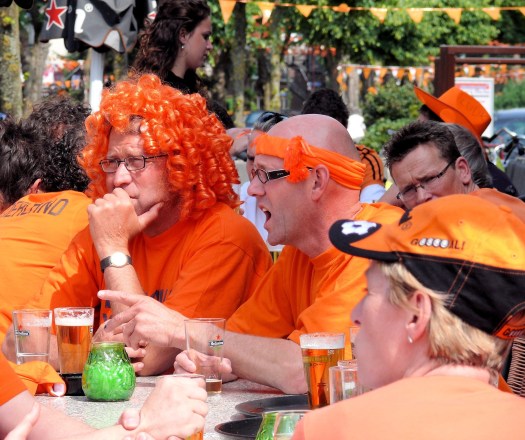
Tomorrow is the Super Bowl. You can really outdo yourself on this day with outlandish fan gear. Never mind who your team might be. The face paint, cheeseheads (yes, I know Green Bay didn’t make it — but cheeseheads! how embarrassing!), any number of other team-specific paraphenilia. Do it up right.
Your reward for all of this? Your teenager just might lock him or herself in his or her room for the duration of the Big Game.
I’ve written about one of my best friends here in the past before. Laurie has been through a series of heartbreaks in the last few years, but it looks like things are turning around. Fingers crossed, knock wood, please God. Please.
Her husband has been through two major health setbacks, and I do mean major. He had a benign brain tumor that slowly had taken away his ability to function in life before it was diagnosed and removed, days, if not hours, before certain death. A few years after that, doctors discovered he had colon cancer. It took three years for him to be cancer-free.
Laurie’s brother, Monte, wasn’t so lucky. He, too, had been diagnosed with colon cancer, sometime between Dave’s brain surgery and cancer treatments. He developed an infection after the initial surgery, which postponed chemotherapy and allowed the cancer to ravage his body. He died last year, a few months short of his 50th birthday.
Her mom had died only seven months before Monte. Laurie is heartbroken and emotionally drained. Her reserves are depleted. She finds joy in her children, who thankfully are healthy, happy and on the right track, both in college, both sharp as tacks. Yes, they no doubt carry scars from the years of their dad’s decline, not to mention the trauma that followed, but Laurie and Dave are good parents, there to support them.
A couple of weeks ago I got a message from Laurie telling me Dave was interviewing for several jobs, and the interviews were going well. One lasted 75 minutes, and he was called back for a second interview. He hasn’t worked in seven or eight years, and that’s hard on most men. He wants to work, wants to contribute to the family income, wants to be a vital part of the community in that particular way.
This job sounded perfect for him. I was so excited, and I believed he would get the job. Moments ago I found out he didn’t, which has crushed Laurie. I told her how sorry I was, that I had thought this was it, and at least we know he interviews well, a very important part of the job hunt.
I suspect that piece of good news isn’t important to them right now, but soon, I trust, he will take hope in it.
I always interviewed well, but I remember a period of time where I was getting this close to several jobs, and inevitably I’d get the call: “I was up all night trying to decide, and finally I chose the other candidate. I’m so sorry. If we have any other openings or she doesn’t work out, I’ll call you.”
The first time, the rejection only stung a little. The second time, I was discouraged but had other interviews in the works. The third time, I admit I wasn’t even able to be upbeat when my prospective employer called with the disappointing news. I couldn’t summon the strength to say, “I understand, and I appreciate the opportunity to talk to you about the job. I hope we meet again sometime,” or something equally trite yet professional. I did say thank you, of course, but I was feeling deflated and overwhelmed, and it showed.
At some point after that, a former employer called and offered me a job with his new business. Okay, the story doesn’t have a truly happy ending here. It was the dream job from hell. Shortly after I accepted the position, but before I recognized the reality, I got a call from one of the companies I’d interviewed with, asking if I was still available. Given the opportunity to go back in time, yeah, I would have taken that job. But hindsight and so on.
I believe Dave will get a job. I pray it’s something he’s happy with, at least content with, for the time he is there. Yes, I’d love it if he could find something he was passionate about, but right now I believe he’d take a job that was less than his dream position, as long as it was rewarding in some concrete way.
Timing is everything. Persistence is critical. Hope is a gift we must make use of every day.
Remind me of this post in the weeks to come. My own job hunt is underway.
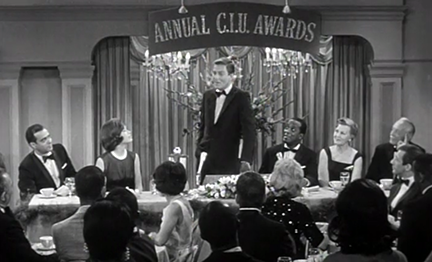
A 1965 episode of The Dick Van Dyke Show shows Rob Petrie (Dick Van Dyke) and his wife Laura (Mary Tyler Moore) accepting an award on behalf of Rob’s boss, Alan Brady (Carl Reiner). The award, given by the fictitious Committee for Interracial Understanding, is for Alan Brady’s contributions to understanding and honesty between the black and white communities.
Mary Tyler Moore, Dick Van Dyke, Joel Fluellen
One sentence in Rob’s acceptance speech gets to me. “It seems to me understanding should be as natural as breathing,” he says. “And you don’t get awards for breathing.”
Understanding in the racial divide is hard work. I’ll be the first to say, I don’t get it, I don’t get what it’s like to be black in America. I’m white, I grew up in an almost exclusively white neighborhood and school district, although as an adult, I entered into much more diverse scenarios.
I have two things going for me in my desire to bridge the gap (well, hopefully more than that, but we’ll start with these two): I was raised in the 60s by parents who believed God made everyone equal, but fully recognized life didn’t treat them that way, and as an adult, I frequently worked with and/or lived in diverse neighborhoods that helped me be at ease with people of numerous ethnic backgrounds.
My high school. Photo c Mike24.
There was a small amount of interracial contact throughout my teenage years. In high school, out of approximately 2,400 students, only one, Tony, was black. Tony moved to my town in his junior year to live with his mom, and a year later, moved back to stay with his dad, where he could go to a school that was significantly more diverse. I was the same age as Tony, and he ended up going to my church, so I got to know him fairly well, in particular because he became close to one of my best friends.
When Tony moved, he didn’t tell too many people he was leaving, so we didn’t get to say good-bye. He did talk to my best friend, Carolee, and she told me he didn’t want a lot of fuss. You see, Tony was incredibly popular, wonderfully talented and in demand socially. He knew we wouldn’t understand why he would want to move to a small town in the middle of nowhere with a K-12 school that had fewer than 400 students. After all, our school ruled.
I didn’t understand. We liked him, and we treated him in the manner you treat someone you like. What I couldn’t see, couldn’t feel and didn’t live was the disconnect between the races, the incredible alone feeling Tony no doubt felt every day walking down the halls of our high school. I knew a lot of the girls stared at him because he was good-looking, but there was no way for him to differentiate between those looks and the stares that came because he was black. For that matter, a lot of girls probably stared because he was good-looking and black. That, I’m willing to wager, is a different look. The element of the forbidden, the socially questionable to a teenager is, well, what makes a simple crush a great romance.
At the church Tony and I attended, there were a handful of black families. Three of those families were related; the husbands/fathers were brothers, all very close in age. They also looked like they could have been identical triplets. Ever the blunt one, I asked my friend Alethea (also black) if it was a problem I couldn’t tell them apart. Did all black men look alike to me?
No, Alethea assured me, she’d known the family for years and the easiest way for her to tell these three men apart was through their wives. The wives were easy to distinguish. So I, too, got to know the families through the wives, as well as their children, who were all under the age of five.
Candy Stripers — a little before my time, but you get the picture.
At the same time I was working as a candy-striper at the local hospital. In case you don’t know, “candy-striper” is the nickname for volunteers who wear a red-and-white striped pinafore, white blouse, and in my case, white ankle socks and white tennis shoes. I worked Sunday afternoons, and the nature of that shift meant we spent a lot of time in the maternity ward.
One of the families I spoke of above had just had a baby. I was walking through the infant viewing area, and the man I thought was the new father was standing there, admiring the newborn, a thoughtful, musing look on his face.
“Congratulations!” I said. “I heard in church this morning you had a daughter.”
“Oh, it’s my niece,” he said. “It’s my brother’s baby girl.”
“I’m so sorry,” I apologized. “I’m always getting you and your brothers mixed up.”
“Everyone does,” he said, smiling.
“Belinda!” my fellow candy-striper, Karen, hissed at me as we walked down the hall. “I can’t believe you didn’t know he wasn’t the father!! He goes to your church!”
“Oh, it’s okay,” I replied. “They’re brothers. They all look alike.”
From down the hall I heard a deep, full-throated burst of laughter. I have no doubt that story was told time and time again in their family. I hope I came across as the girl I think I was: nice, kind, perhaps a little naïve and (please, please) not racist. Well, the story would be better that way, so maybe I did.
Was I ignorant? In many ways, yes. I simply didn’t understand.
No matter how funny that man and his family may have found the story, and I hope they did laugh, the underlying issue isn’t funny. Was I ignorant about racial issues? In many practical ways, yes. I simply didn’t understand. If you were black or any other minority and I was your friend, if I treated you as well (or poorly) as any of my other friends, what was the problem between us? If you were a complete stranger I passed in the store, a customer in my teller line at the bank, a sales associate at the cosmetics counter where I bought eye shadow, why would there be a racial problem if I spoke to you with respect and dignity? And yet, there was. I just didn’t always know it.
An offhand remark might be misinterpreted. That isn’t exclusively a racial issue, that’s human communication. Some of it is regional; terms that mean one thing in California have an entirely different connotation in Minnesota or Arkansas. I learned not to use the phrase, “jerk someone around.” In some parts of the country, it means to treat another person poorly, in other parts, it’s a very sexual expression. I had a hard time keeping it straight.
Some of it is coming into the middle of a conversation and hearing a phrase out of context. I’ll never forget when, in my late teens, one of my friends and I were talking about a third friend’s abusive relationship. Gina, the one I was talking to, was a literature major, and would use literary terms in everyday conversation (which drove us crazy), including the word “dark” to describe anything bad or evil.
We were waiting to be seated in a crowded restaurant, and there were two hostesses, one white, one black. Our name was called, and as we approached the hostesses, Gina, referring to our friend’s situation, was saying, “she needs to throw that dark dog in the river.”
Both young women tensed up. Gina, feeling passionate about our friend’s plight, was only making things worse. I don’t recall the rest of what she said clearly enough to recreate it, but it did sound bad out of context. I was uncomfortable and didn’t know what to say without further digging a hole.
Our waitress had no problem with it. Young and brassy, she, perhaps inappropriately, confronted Gina about the term “dark dog” as well as the rest of her rant.
Image c RetroClipArt — Adobe Stock
“Did you mean a dog, or a black man?” she asked. “Because this is a nice restaurant, and we don’t tolerate bigots or puppy killers. Those girls,” she pointed to the hostesses, who were out of hearing distance, “are my friends, and they were offended. I just want to know why.”
Now I was incensed. “We were talking about a friend’s boyfriend,” I said sharply (and loudly). “Her white boyfriend.” That didn’t sound so good to surrounding diners, either.
Gina was perplexed. “Come on,” I said, “let’s go.” We left, both upset and confused. We weren’t racist, surely not?
I stopped telling that story after several people told me Gina’s statements actually were racist and we didn’t realize it. I’ve struggled with that one. So much of our language is indeed subtly racist, under the radar and pervasive. It is perhaps the most difficult to challenge and change. Gina, a typical college student, was under the spell of all she was learning. I’m willing to bet she was showing off more than putting down by using the word “dark.”
Jean Adair, Josephine Hull in “Arsenic and Old Lace.”
Is the term “dark comedy” racist? I do not know. I use it to describe movies such as “Arsenic and Old Lace,” in which two elderly ladies kill off their gentleman callers and bury them in the cellar, hence the darkness in the comedy, and I’m far from the only one to do so. I don’t even know what the racial connotation would be in the term (I get the correlation between “dark” and “black,” but it’s the further definition I’m unclear on). Maybe that’s the problem. I don’t know.
We are all equal in God’s eyes, but we do not live in a society that treats us that way, and our view of ourselves and our world is shaped in part by how we’re treated. Several years ago I attended an annual statewide convention for people who, like myself, worked with others with developmental disabilities. The keynote speaker was a woman who was black and in a wheelchair. I don’t know what her disability was, but I surmised it had been lifelong.
“When people ask me how I identify myself, as disabled, black or female,” she said as she summed up her talk, “I tell them I identify myself first as African-American, than as a woman, than, as a black woman with a disability.”
That was an eye-opener. I gained a much greater understanding about why the phrase, “I don’t even see [name of black friend] as black anymore. He’s just [name]” is so degrading. I had long ago realized how bogus it was to say that. If you can see, you see another’s race. What I hadn’t realized was if you’re black, it’s part of your identity. An essential part. If you’re white, it rarely is a significant part of the equation of identity.
When a white person says they don’t see race, they mean, “I’m not adding something to our relationship that would separate you from me.” As I understand it, if you’re black, you’re hearing, “I’m acceptable if I deny an essential part of who I am.” There’s a huge discrepancy in meaning there, and a cartful of issues to sort through.
I’m always timid about adding my comments. Will some barely disguised ignorance show through?
I have several blogging friends who are black, and I follow their blogs and interact with them because I like them. Some of them address race more frequently than others, and I’m always timid about adding my comments to their posts. Will some hidden arrogance, some barely disguised ignorance show through? I’ve had some people reply sharply to my comments, but fortunately, I’ve been smart enough to respond and try to work through any misunderstandings or subtle feelings of whatever I may be expressing.
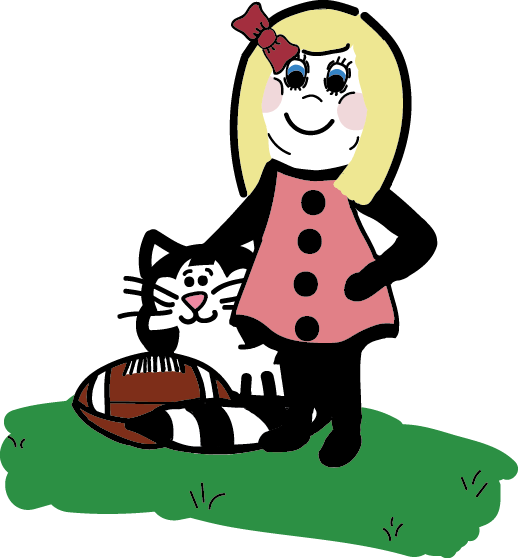
I’m acutely aware of the danger of sounding condescending. Plus, when you’re leaving a comment on a blog, the context of Who I Am isn’t there. If you haven’t interacted with me, all you have is my little profile picture, little white me in my pink blouse, to give you any insight into who I am.
Image c RetroClipArt — Adobe Stock
I can never fully understand the black experience. I want to be open, empathetic and supportive of all races and other minorities. Even as I write that, I’m reminded I was chastised once for using the term “races” synonymously with “minorities.” I felt like I couldn’t win, although I did have a decent discussion with that blogger.
I’m reminded of Rodney King, victim of terrible racial abuse, who, after his ordeal had been addressed by the courts and the public, said, “Can’t we all get along?” Some people mocked him for saying it, some called it simplistic and even foolish. I don’t want to brush over the evil or painful, but I do want us all to get along.
I know it isn’t that easy.
I’m asking my black friends to bear with me. I sincerely want to do better. I’m asking my white friends to seek understanding. For that matter, we should all seek understanding. The learning and growth are a strengthening process for all of us.
This is a turbulent time for our country, but it’s also a time of opportunity. I hope someday understanding is, indeed, as natural as breathing.
As the man said, you don’t get awards for breathing.
One of my longest-running blogging friendships is with Arpita Pramanick, a young woman living in India who is diligently pursuing a career as a writer. She has a new book coming out soon, “How I Tamed the Dragon Named Fear,” and as a way of promoting its release, she invited some of her fellow bloggers to write on the topic of fear. Here’s my contribution. I’m very proud of Arpita for her determination as a writer and the accomplishment of completing a book!
Today is the final post of the series of guest posts on fear. Today’s blogger is Belinda, someone I have known through the blogoworld for sometime now. I really enjoy her wonderful posts and her insights into life and I am happy to provide a peek into her thoughts through this post. Thank you Belinda for bringing out the silver lining around fear via this post.
||Guest Post||
Contributor:Belinda O.
I encourage my cats’ fear of strangers, at least, I don’t discourage it. If a stranger comes to the door, particularly someone carrying tools and wires or other unknown entities, the cats hightail it down the stairs and under the bed. There they’ll stay until they’re certain it’s safe, and if they fall asleep (which they often do), even longer than that.
Fear helps keep my cats safe. If I’m not home, I want them hiding if a…

 For those of you who’ve seen this post already, thank you for your loyalty! It’s been a year and a half since I first posted it, and some of you are still here! You may enjoy seeing it again, and for some of you, it’s new — and timely.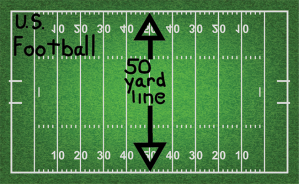







 I encourage my cats’ fear of strangers, at least, I don’t discourage it. If a stranger comes to the door, particularly someone carrying tools and wires or other unknown entities, the cats hightail it down the stairs and under the bed. There they’ll stay until they’re certain it’s safe, and if they fall asleep (which they often do), even longer than that.
 My World With Words
You must be logged in to post a comment.