Reality vs Romance

Daily writing prompt
Do you believe in soulmates? Why or why not?

I’ve found that most people who call someone they’re in love with their soulmate are actually still in the infatuation stage of a relationship. It’s easy to see the connection then–everything seems perfect. You both like the same food, same entertainment, same kinds of pets. You were meant to be.

And that may be true. I do believe, to a certain extent, that there is a power that draws us into relationships. I have friends who’ve been happily married for forty years or more. I was there when they first met each other and lived through the ups and downs of courtship and the forces that brought them to the ultimate decision: we’ll get married.

Those friends can tell me they’re with their soulmates and I’ll believe them. You go through that many years of marriage and you’ve seen the ups and downs of life together–sometimes, perhaps, less together than you’d want to be, but in the end, you’re still with that same person.

Interestingly, though, I’ve never had a friend or relative who’s been in a long-term relationship call their significant other “my soulmate.” Perhaps, like me, they see that as a naive belief. When you’re together for a long time, you discover there are a lot of differences between the two of you, and you’re not the perfect match you initially thought you were.

That’s not to say that your relationship is bad. People are flawed, and it’s sometimes difficult to discover those flaws in someone we love. But that’s also the beauty of settling in to being together. You learn to work it out. You learn to love.

I had a boyfriend who ended up breaking up with me because he didn’t think we were soulmates. I asked him what he thought a soulmate was, and he said it was someone you were completely in sync with. You never disagreed with each other because you were destined to live happily ever after.

Yeah, he’s still single.

Image Credits: Couple Holding Hands (header) © Pete–stock.adobe.com; Birds in Love © Celestynka–stock.adobe.com

Been There?

Daily writing prompt
What’s something most people don’t understand?

Another broad question that I find difficult to answer. Is it something about me they don’t understand, something about politics, something about religion, or something about, say, cats? And most people? I hate to judge what others do or do not understand.

But I’m experiencing something first-hand now that I only knew about second-hand from other people, and that is, when an aging parent gets ill. My dad has pancreatic cancer. For those who don’t know, that’s not good. The five-year survival rate is about nil and generally it’s not caught until it’s too late.

Until very recently I could brag about how healthy my dad was. He took no medications (he called his vitamins his “medication”), he had no illnesses, he was very active. At the age of 89, he golfed three times a week, bowled twice a week, played bridge one or two times a week, and played bocce ball once a week. He chose to stay active. That doesn’t count all the sudoku and math games he played.

Then, in January, he began experiencing some pain in his side. It took a month, but they finally diagnosed the cancer. I was in shock. My exceptionally healthy dad has pancreatic cancer? It is stage three and as far as we know, it hasn’t spread to his lungs or lymph nodes. He’s started chemo, but there have been setbacks and they’ve had to cancel his chemo treatments a couple of times.

I’ll say it again, I’ve been in shock. They say the first stage of grief is denial, but I don’t think I’m in denial. I’ve talked to my friends about it and they sympathize. Coming to grips with an aging parent’s mortality is tough. My dad’s attitude is great, and if that has anything to do with it, he’ll live quite awhile longer.

I’m going out to see him soon and I’ll see for myself what’s going on. In the meantime, I’m learning I don’t understand what’s happening. I guess most of us don’t until we go through it ourselves. I’ve always tried to understand, but I realize now my understanding was superficial.

Maybe that’s what most people don’t understand: you can’t truly know until you’ve been there yourself.

Image Credit: Header: © Lila Patel–stock.adobe.com

Bang, Bang You’re It

Daily writing prompt
What was the best compliment you’ve received?

I can’t say this was necessarily the best, but it’s the one that’s stayed with me for more than fifty years. In junior high (now known as middle school) I wore my hair like everyone else did in those days–straight, long and parted down the middle. Looking back, it was hardly the most flattering fashion, on me and most others. But that was the style.

One Christmas vacation, for reasons I can’t remember, I decided I wanted bangs. I was pleased with the result and looked forward to showing off my new hair style when I got back to school. Unfortunately, most of my friends either didn’t like it or didn’t care and said nothing. But one boy did.

“I like your bangs,” he told me. “It makes your face look less round.”

I never was quite sure that my bangs really did make my face look less round, but a boy had noticed my hair. Not a boy I was particularly interested in, but one whom I wouldn’t have expected a compliment from.

I’m not naming him, even with a pseudonym. It took me years to realize he was interested in more than my hair. He liked me. I was shy and decidely not popular, he was outgoing and quite a hit with everyone. Unfortunately, by the time I recognized his interest, I was in my 30s and hadn’t seen him in more than fifteen years.

But back to my hair. From that time in seventh grade until now I’ve always worn bangs. Not so much because a boy said he liked it, but because he was right. Bangs do look better on me.

So from me to this unnamed boy (now both senior citizens, good grief): thank you. And I’m sorry I didn’t see you for who you really were.

Image Credit: Header © Felippe Lopes–stock.adobe.com

No Computer? I Remember It Well.

Daily writing prompt
Your life without a computer: what does it look like?

Well, like so many of us, I’ve become dependent on my computer and phone (or mobile device, as they accurately say in some countries). But I lived the first half of my life without a computer, so I know exactly what my life would look like. I’m including cell phones in this post. They’re as much a part of my “computer life” as my laptop is.

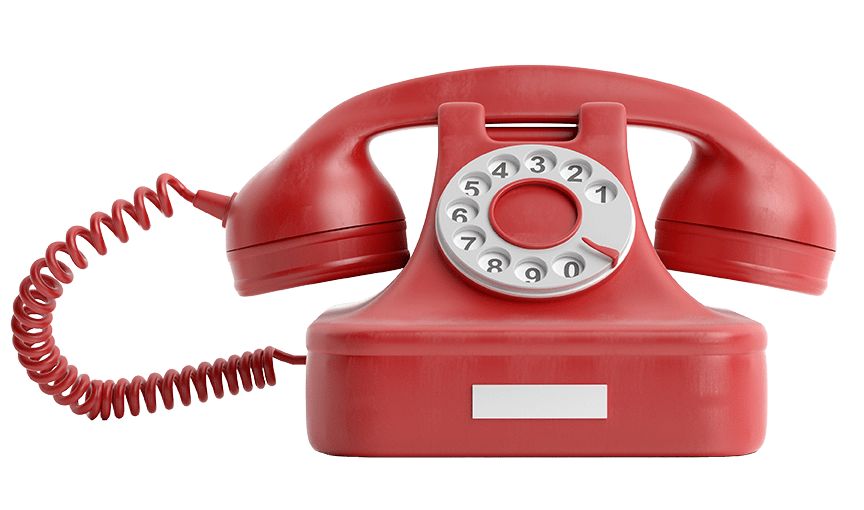
Okay, without a phone, you didn’t leave home without change for a phone call. Or money for a cab, if you were on a date and were concerned he might not be the gentleman he appeared to be. For a long time, that call was just a dime. Then it became a quarter–then I’m not sure where it went. It got expensive.

Before there were cell phones, you may have had voice mail, or you may have relied on an answering machine. The latter was a great way to screen calls since it had the caller’s name on it, unless they blocked the number. Can you even block number on a cell phone? I’ve never really looked into it. The other nice thing about answering machines is you could hear your message and pick up the phone if it was someone you wanted to talk to.

But before voice mail or answering machines, you ran to the phone if it rang, because there was no way of knowing who it might be and It Might Be Important. I remember in high school one of my English teachers shocked our class by saying he didn’t always answer his phone when it rang. What if someone needed to reach you? we asked. I don’t remember his answer, or if he even gave one.

Of course there was no texting then, either, so you had to make a call to communicate with someone outside of your home.

My first job out of high school was at a bank. These days everything is done online, but back then, you got paid with a paper check that you had to deposit at a bank. Needless to say, pay days were busy. People would wait an hour in line, and we had fifteen tellers. There were no ATMs, either. The first ones were introduced while I was on that job, and they were game changers. But I don’t remember how you got the cash back, since there was no such thing as a debit card.

If you were sticking to a budget, you might write out checks to pay your bills once a month, then mail them the next day. You needed a lot more stamps back then. If you misplaced a bill, there was no email reminder to pay it and you might get behind in your payments.

Blogs? I guess the closest substitutes for what I’m doing here now would be journals or letters, and that meant hand writing everything. Which brings me to my next point. When I was in high school, I was told not to take typing, because if I knew how to type and my future boss knew this, I’d always be a secretary and could never move up. Through circumstances I won’t describe here, I did take a typing class, but came into the class late in the semester and never caught up. To this day I can’t type particularly well. Thank goodness for spell check.

So, like I said, I know what my life would look like. And I don’t like it.

Image Credits: Typewriter © olegkruglyak; Coins © LONDON2010; Rotary Phone © SRRiadi; Check © HaywireMedia All, stock.adobe.com

Change Will Come

Daily writing prompt
What’s the best piece of advice you’ve ever received?

I’ve written about this before, so forgive me if you have read it already. But the best piece of advice I ever got was actually not exactly advice, but an observation from which you can draw your own conclusion. When I was in my 20s, my dad told me, “whether times are good or times are bad, we always think they’re going to last.”

If times are bad, we may not see a way out. If they’re good, we naively believe the good times will keep on rolling. I needed to hear that back then because my life was on a rocky road and I didn’t see an end in sight. By the time I hit 30, things had changed and I thought I was set for life (talk about naive!).

While my life has been on an even keel lately, I know that could change in a moment. My mom is 89 and has outlived her parents by quite a bit. I believe she’s likely to die suddenly, perhaps a stroke, and I know it could happen any day. My dad is also 89 and longevity runs in his family, so it wouldn’t surprise me if he lived another ten years. He’s very active, his mind is sharp, and he’s going strong.

But we got a bit of bad news last week about my uncle, my dad’s brother, who’s 92 and was also expected to live into his late 90s, just as their two older brothers and father had done. He has lung cancer and has been given 12-18 months to live (FYI, he’s not a smoker). That breaks my heart, and my dad is crushed as well. I hope to see my uncle in April, but there are a lot of ifs about that trip.

So you just never know what the day will bring. Tornadoes, fires, hurricanes–all of these hit innocent people on a regular basis.

But eventually the good comes back. My dad has buried two wives, one who had cancer and the other Alzheimer’s. Today, while the pain of those events lingers, he’s doing well. His long-time friends stepped up and he’s made new friends as well. He couldn’t golf much while Jeanne, the one with dementia, was sick, but he’s back to that three times a week, as well as bowling twice a week, bridge whenever he can, and bocce ball. Oh, and he works out and rides his bike on a regular basis. Like I said, he’s very active. And happy.

Of course the news about my uncle knocked him for a loop. He knows what my aunt will be facing and that hurts as well. It isn’t the time to tell her the good will come back, but hopefully his example helps her.

All we can do is live our lives.

Image Credits: Balance © Jane–stock.adobe.com; Happy Kids © mediastok.ai–stock.adobe.com; Bicycle © Lucky Step–stock.adobe.com