
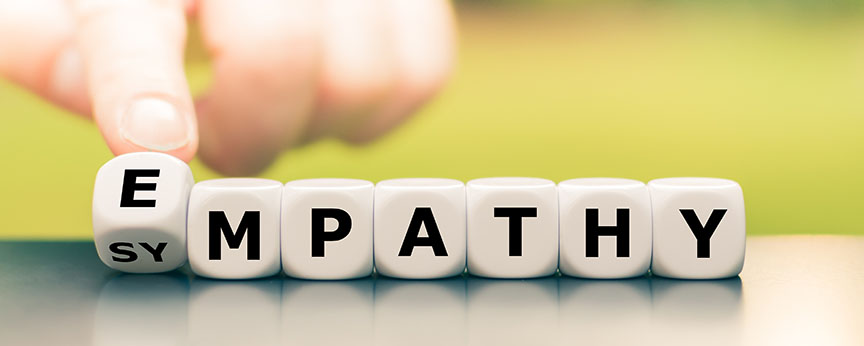
The other day at work, one of my co-workers, Marlene, got a call. She looked at her phone, saw who it was and exclaimed, “I told her not to call me until I got off work!” It turns out the woman calling recently had a traumatic brain injury and struggled to remember anything. She had been friends with Marlene before her TBI and wanted to re-establish the relationship.
Another colleague, Lucy, recognizing the situation, said, “that girl needs to get a life!” I was incensed. What did she think was happening? Indeed, the injured woman needs to get a life. That’s what she’s trying to do. It’s challenging and if Marlene isn’t up to being a friend, she needs to find a way to say “no.”
Instead Marlene and Lucy mocked this poor woman for a good fifteen minutes. I wanted to cry. I also wanted to say, “show some empathy!” but I realized neither woman is empathetic. They might show a mild amount of sympathy, but that’s different.
Empathy sometimes comes to us in life after our own trauma. For some people it’s a natural part of who they are, while others need to recognize what it is and cultivate it in their own lives.

I Googled “empathy vs sympathy” and got this definition: “Empathy is the ability to deeply understand and share the emotions of another person by ‘walking in their shoes.’ In contrast sympathy is feeling sorrow, pity, or concern for someone else’s misfortune without necessarily experiencing their emotions.”
In the situation above, Marlene and Lucy should have recognized the struggle this woman is facing. She can’t remember much, she struggles with understanding things like time and personal boundaries, and she is easily confused. I’ll say it again, if Marlene isn’t up to being her friend, she needs to find a way to say “no,” even if it means going to the woman’s family and asking for help in doing so. But I know Marlene and I know she’ll just drag out the situation and hope the woman gets the hint.
Not all of us have the skills to help the disabled, but when that’s the case, the right thing to do is to acknowledge it. Then look at the situation and grow from it.
Image Credits: Empathy Dice © Frank H. –stock.adobe.com; Heart in Hands © obeyleesin–stock.adobe.com


Such a shame. With people like that in the office, you have to wonder what they say about everyone else. They sound so high-school, don’t they>
LikeLiked by 1 person
They really do. It’s difficult listening to them, but they’re standing so close to me I can’t help but hear every word.
LikeLike
I am left without words. I call them mean girls and I have had my share of contact with people like them. I suppose we all have. I hope that anyone they love or loves them never finds themselves in a situation like this woman that is trying to get her life back. I don’t think there would be any empathy or compassion for them. I hope someone saves this lady with the TBI from this Marlene woman.
LikeLiked by 1 person
I really do, too. Marlene is no friend to her, and I think someone needs to intervene and let her know. I just don’t know who that would be.
LikeLiked by 1 person
It must have been hard to hear the lack of empathy from your coworkers, Belinda. Personally, I find the subject to be deafening right now – especially with what has been going on politically. Sometimes my heart aches, but I do not engage with people who see things differently than I. Still, I can’t understand, their indifference to human suffering.
I focus instead on my ability to empathize and make a difference to others. Shining a light inspires empathy, and that’s where I’m putting my energy!
LikeLiked by 1 person
That sounds wonderful, Judy.
LikeLiked by 1 person
I much prefer empathy to sympathy… Sympathy sounds too formal, too impersonal…Empathy implies strong feelings. It means that you really feel the person’s pain. Anyway, I think empathy is something that needs to be taught at a young age either verbally or by example. Just my opinion.
LikeLiked by 1 person
Okay, lost my response to you, so if this is a duplicate, my apologies. But I agree with that empathy needs to be taught. Some people are naturally empathetic, but most need some guidance.
LikeLiked by 1 person