

I’m betting most of you know someone with Cerebral Palsy (CP). I know several people as a result of formerly being a case manager for those with developmental disabilities, not to mention a friend in high school and the daughter of a co-worker now. It’s a disorder that runs the gamut in how much disability it causes, but all with CP have challenges with movement and posture.
They also have challenges with public perception.
Children, we all know, can be cruel, especially when presented with a classmate who is different in some way. My friend Leigh and my co-worker’s daughter Anna (not her real name) were teased so much all through school that they became reclusive and had difficulty making friends. Leigh found a church group and Anna relates well to adults, but not people her own age.
Anna’s mom talked to Anna’s teachers, who allegedly all said the same thing: “we’ll just make it worse by punishing the children who tease.” (Maybe that’s true, maybe not–I’m not entirely sure Anna’s mom is telling me everything there.) Many schools have a zero tolerance policy with bullying now, and hopefully that helps children with disabilities survive the turmoil of their youth.
![AdobeStock_370325084 [Converted]](https://myworldwithwords.com/wp-content/uploads/2022/10/adobestock_370325084-converted.png?w=388&h=233) Then there’s the opposite reaction of too much sympathy. When I worked in a bookstore, a boy using a walker came in once and headed straight to the children’s section. He asked for help once getting a book down that he couldn’t reach, and aside from my usual can-I-help-you-find-anything, that was all he needed from me. When he was ready to check out, he put his selections in the walker, and we headed up the cash register, where an older woman gushed all over him.
Then there’s the opposite reaction of too much sympathy. When I worked in a bookstore, a boy using a walker came in once and headed straight to the children’s section. He asked for help once getting a book down that he couldn’t reach, and aside from my usual can-I-help-you-find-anything, that was all he needed from me. When he was ready to check out, he put his selections in the walker, and we headed up the cash register, where an older woman gushed all over him.
“Oh, you brave little angel,” she said. “You remind me of my granddaughter, and I love her so much.”
She turned to me and said, “Poor thing. His life must be so hard.” This right in front of the boy.
“I think he does just fine,” I snapped, and checked him out. I was impressed that he handled his own finances–he was probably 11 or 12–and when his mom showed up seconds later (she’d been looking for books in another section) I told her as much.
She beamed and he smiled. “He insists. He’s pretty independent.”
So there you go.
I think most of those reading this blog already know this, but I’ll say it anyway. Children and adults with disabilities, CP and otherwise, need help with the things they can’t manage because of the limitations of their disability. That’s it. The rest of it is the life stuff we all face (okay, we all need help with that from time to time) and you can’t coddle or patronize them.
That’s how you show respect and love.
Image Credits: Friendship with Heart © artbesouro–stock.adobe.com; World Cerebral Palsy Day © Waseem Ali Khan–stock.adobe.com


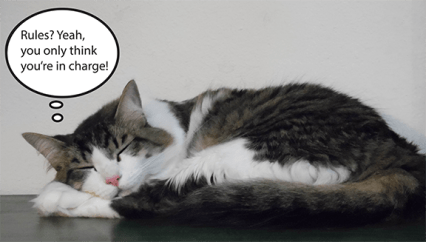 Still, old dogs, new tricks. Forget dogs — I should be like my cats. They (reluctantly) follow the few rules I absolutely enforce and don’t give a rip about much of anything I else I ask of them. Somehow they know what really matters. I rarely reprimand them, or think any less of them for their indifference.


 This was the point where I wanted to shout, “WE ARE NOT INTERESTED. JUST RING UP OUR PURCHASE AND STOP HARASSING US ABOUT YOUR DAMN CARD.”
 I knew what not to say. I laid out the reasons for my feelings in a straightforward manner, and sought the narrow path of common ground with my friend. “I don’t expect any president to be perfect,” I wrote in part, “and I respect that it is a challenging job. I want all of our presidents to succeed, just as I want our country to succeed. I just don’t trust President Trump.”
 She chastised me for committing an offense I truly couldn’t see I was guilty of having done, citing a conversation I’d had with her husband as another example. By this time, I’d reconciled with the first woman, so I asked for her perspective about what our mutual friend had told me. I was concerned I might be blind to what would be a fairly significant problem.
 High school was a challenging time for me, and there were plenty of days my appearance showed the depression, anger and hurt I was feeling so deeply. I could always count on my friends Leigh and Sue to compliment my hair or tell me I’d lost weight on those days. Trust me, the compliments reflected their kindness, not the truth about my hairstyle or figure.
 My World With Words
You must be logged in to post a comment.