A high school teacher once told me, “the true meaning of sophistication is knowing what to do in the situation you’re in.”
Admittedly, that doesn’t make me any more sophisticated than with the popular definition, but it does give an added dimension to the ideas of sophistication, elegance and grace.
How many of us have been in a social situation in which we feel like a duck out of water, surrounded by graceful, sleek panthers? They slide from one individual to the next, mysterious, powerful and so, so pretty, while we waddle and quack.
Maybe the best thing to do is find a party for ducks. If true sophistication is knowing what to do where you are, maybe leaving is the most gracious option available to you.
That’s not failure. For one thing, some people are naturally more comfortable in a social situation. I’m generally not one of those people. I like my small groups and familiar situations. I can survive in a crowd, but I’m probably not having fun.
When to make an entrance, how to make an entrance, and when & how to exit are prime social skills. If you’ve got those down, record that under “elegance.”
And just think how awkward those panthers would feel at a party for ducks. Assuming they don’t eat us alive…
Okay, in my place I use a Swiffer. As long as you contribute to the household chores, broom, Swiffer, it doesn’t matter. (I take that back…use the Swiffer. It gets up more dirt. You should know that.)
Turns out women are making great strides in the workplace…but not at home. They still do the majority of the housework, despite working just as many hours, with just as great a commute, as their male counterparts.
Sexiest man alive, according to my friends, is the man who does the laundry.
What makes it worse, to me, is that men actually gain self-esteem when they help out at home. Guess why. Because they see themselves as good guys, they kind who help out their women. Not entirely sure I’m fond of that reasoning, but for the moment, I’ll go with it, if it helps turn the tide. Sometimes you have to use what’s working against you to get things to work for you.
My married friends tell me their husbands are never sexier than when they’re doing the dishes. Unless it’s when they’re doing the laundry.
If it’s so easy to make their wives happy, why don’t the men do it more often?
Well, part of the problem is, they believe they are doing just as much as their wives. Yet study after study shows it simply isn’t true.
Another problem? Old attitudes die hard, and I suppose sports programming gets in the way, too. Sometimes the women are at fault, because the men say, “I’ll do it after…” and their wives get tired of waiting. I say, wait it out.
Especially if it’s laundry. Let him wash his own darn underwear. Oh wait, I see the flaw(s) in my thinking…
I don’t know the answer to this problem. Either the man gets it or he doesn’t, it seems, and yet despite my light tone in this piece it is a serious problem. Women are tired and depressed, and getting some help with housework actually would make a difference.
Changes need to be made. It’s as simple as choosing to make a decision that will make your spouse happier, healthier and more relaxed. And it isn’t that difficult to do a load of laundry or three, but when it comes on top of a day at work, a nightmare commute, getting dinner on the table…and off…not to mention caring for the the kids, it can push you over the edge.
Yeah, the Swiffer’s better.
I’m not saying all men do nothing. I’m sure most contribute to the household in some way. But by and large, the burden still falls on the women.
Take an honest assessment. Don’t look at how much you’re contributing, look at the other person. If their hours start to tally faster than your minutes, do something about it.
Like pick up a broom, er, Swiffer. Those things aren’t just for sweeping, they work for mopping, too.
“I used to think I was the strangest person in the world, but then I thought, there are so many people in the world, there must be someone just like me who feels bizarre and flawed in the same ways I do. I would imagine her, and imagine that she must be out there thinking of me, too. Well, I hope that if you are out there and read this, know that, yes, it’s true I’m here, and I’m just as strange as you.”
― Frida Kahlo
How many of us have sat silently at night, convinced we stand alone in the world in our oddness, and uncertain as to how to change? Fearing constant rejection throughout our lives?
Even at the age of four I felt like an outsider.
For years I lived my life that way, believing not only was I too far outside the norm to be accepted, but that I would never truly be loved, that I would be isolated from others all of my life.
I no longer feel that way, even though I know I stand alone in many ways. Well, perhaps not truly alone, there are others like me, but I’m not sure I know them. I’ve found a way to be myself in the world, and perhaps that makes me oblivious to the thoughts of others.
I’m doing better these days.
Well, truthfully, I have my moments, and in those times I wonder if I’m blind to my oddities the rest of the time. If that’s the case, there’s little I can do to change now. I am who I am and I don’t know any way to be any different.
I’m not ruled by those thoughts anymore. Perhaps I was overly sensitive to them before, and made things worse by behaving in a way that matched how I believed others saw me.
“If at first you don’t succeed, try, try again. Then quit. No use being a damn fool about it.”
― W.C. Field
Not me. Not now, not ever.
I can’t roller skate. Nor can I bowl, or do a pull-up. I don’t expect to ever be able to do any of those things, and they’re no longer important to me. At one time they were, and that stayed with me for way too long. But I’ve gotten over it and accepted my limitations.
I didn’t stop trying to learn how to bowl until I was in my 30s, when finally someone told me it was acceptable not to have that particular skill.
He didn’t word it quite like that, however. We were at a bowling alley with a group from church, and he was splitting his time between reading a book and talking to others. When I mentioned what a terrible bowler I was, he shrugged his shoulders and said, with a laugh, “Who cares? It’s not something I want to be known for anyway.”
Okay, a bit snobby. It did lead me to think, however, is this really me? Is it a goal of mine to be a better bowler, or is everyone else in my circle telling me it should be?
There’s a point where you ceaselessly persevere, and there’s a point where you say, is that even a skill I truly want to master? I had no real interest in bowling, I’d just been told over and over not to give up, I could do it if I tried.
But I couldn’t. I tried and tried, and my body would not cooperate. What’s more, I likely never would have gotten to a point where, even if I could hold my own in a game, I would have looked forward to it. I did not want to bowl.
Once I figured out that hanging onto a group of friends whose main activities I didn’t enjoy was fruitless, I was a lot happier. It took some time, but gradually I developed friendships with people whose faces lit up when they talked about doing the same things I wanted to do.
I know, I know, this isn’t a waltz
That’s not to say I’ll always avoid everything I’m not particularly good at doing. I would love to be able to dance, an old-fashioned waltz, perhaps, but it’s fair to say even at my best I won’t be entering any contests. That’s not my goal, at least not at this point. Right now I’d be happy to keep the beat.
(I have learned something about dancing over the years…call it sexist, or call it practical, but as we all know, men lead. With a strong lead, even a woman who isn’t a good dancer looks good. So half my battle will be finding the right partner.)
I’m not limiting myself only to friends who share my interests, either. Some of my best friends (a-hem) are bowlers, and good ones at that.
I don’t have to be the best, or even particularly good, at any given skill to enjoy doing it. I have my expert talents, and I have those I fumble with. It’s that mix of abilities and experience that makes me who I am, perfectly me.
Fresh out of high school, I was driving my shiny new Corolla on the freeway when a car passed by with a seemingly friendly honk.
Unsure as to its exact intent, I glanced over at the driver, who saluted me, while his passenger, likely his wife, leaned over and waved. I’d never seen them before, and as far as I know, haven’t met them since.
That split-second encounter sustained me for days. I was struggling with a not-yet diagnosed mental disorder and falling into deep despair on a routine basis. My parents, now in the middle of their divorce and focused on their own lives, were distant and angry when I turned to them for encouragement. I had little in common with my siblings, and we weren’t much of a support system for each other.
So for strangers to reach out to me in that small way, for whatever unknown reason, meant a lot. What made it even more meaningful was the weary look on both faces of this couple, who had two curly-haired children asleep in car seats and luggage piled high in the back of their small out-of-state station wagon. As young as I was, I knew enough to feel for them, and to appreciate a friendly gesture made despite their own obvious fatigue.
I said a quick prayer for those people who would always be strangers to me, and over the years since, when they’ve come to mind, I’ve done the same again.
I trust their small yet meaningful act of kindness has come back to them at times they needed it most. Who knows what road life has taken them on; mine certainly went nowhere near the path I anticipated.
A gracious word, a flagging but compassionate nod, an unexpected and sincere grin. Never doubt it: little things mean a lot, and your smile can light a dark path.

![AdobeStock_96443843 [Converted] c geosap nbg](https://myworldwithwords.com/wp-content/uploads/2016/04/adobestock_96443843-converted-c-geosap-nbg.png?w=204&h=204) How many of us have been in a social situation in which we feel like a duck out of water, surrounded by graceful, sleek panthers? They slide from one individual to the next, mysterious, powerful and so, so pretty, while we waddle and quack.
How many of us have been in a social situation in which we feel like a duck out of water, surrounded by graceful, sleek panthers? They slide from one individual to the next, mysterious, powerful and so, so pretty, while we waddle and quack. When to make an entrance, how to make an entrance, and when & how to exit are prime social skills. If you’ve got those down, record that under “elegance.”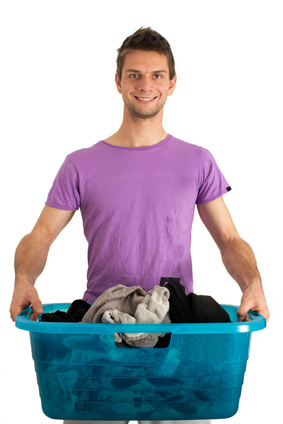


 My World With Words
You must be logged in to post a comment.