

Apparently being good in math isn’t considered American.
Not by the rest of the world, anyway. Yes, I’m making broad generalizations, and stereotyping can be a dangerous choice, we all know that. When I was young, people from Poland and Italy were assumed to be less intelligent. The number of jokes I heard denigrating my Polish ancestry made an impression, and not a positive one.
So I’m sensitive to such comments as, “well, of course she’s good in math, she IS Chinese,” even if it’s a “good” stereotype (no such thing, but that’s for another post). Still, you can’t ignore the statistics. Asian countries place highest in math scores (well, all education scores, for that matter) and second-generation Asian-American students do better in math classes as well.
American students are way down the list. You’ve heard it before, and there are many explanations. A few actually make sense without being demeaning to anyone.
Are Asians inherently smarter? I couldn’t find any evidence of such, but two things stood out to me when I read up on this subject: one, they value education in a different way than Americans do, and two, they integrate math into everyday conversations with their little ones. Americans prize reading to their children, and there’s nothing to fault there. In fact, that’s a wonderful tradition to start in virtually any family.

But how many Americans make it a habit of getting on the elevator and saying to their children, “we’re getting on floor 3 and going to floor 8. How many floors is that?” One of my favorite fellow bloggers has a fantastic blog dedicated to this concept, Journey to Help Children With Math. She’s taking a break right now (she just finished her M. Ed. in Math Elementary Education!), but there are plenty of past posts with great ideas for parents.
You can’t make your kids focus on education at every moment, but you can make learning fun. Even without children at home, I struggle with the balance between work and play for young students. We all need our down time, and I see so much pressure in even the earliest grades with volumes of homework and projects. Some kids thrive on that pressure, while others break. I’ve seen both sides in my own family.
That’s perhaps an American way of thinking. No apologies.
Another article I read stated Asian countries teach a more intuitive style of learning math, and (note I’m quoting here) the “top schools” in America use that same method. If that’s the case, maybe more American schools — and their students — would benefit from making a change.
During the entire time I was a student, from kindergarten to college, I would initially struggle with my math lessons, then one day, I would have a breakthrough and “get it.” Today I have a fairly good “math mind,” although a lot of that I credit to the Schoolhouse Rock episodes that would play on Saturday morning between episodes of my favorite cartoons.
Even as I’m writing I hesitate to suggest any changes, since I’m no expert and read a whopping total of five articles on this subject. And I do know of some modifications schools have made in the way they teach other subjects that shock me. In particular, I’ve heard of teachers who instruct children to spell words the way they sound, and trust they’ll learn the correct spelling as they grow older. We’re talking second and third graders who are told “edyookashun” is acceptable. So changes should be made with care and a fair level of caution.
But I do think talking to your children in everyday conversation about math is a good thing. Of course as they get older, your own knowledge of math may need to expand.
Math is relevant. You use it in everyday life, from counting change to calculating how much you can get done in an hour to figuring out how far you can go on 1/3 of a tank of gas. That’s just the basics. Virtually every profession requires some math skills, particularly anything to do with anything computer-related.
Math counts.
Images courtesy of Pixabay

 There is a certain thrill in procrastination, and some say that’s why people do it, to get that adrenaline rush that comes from facing a deadline there’s no way you can meet. Then you do, and the surge that races through you (if you’re not dead tired) is reward enough to compensate for all, or most, of the negatives (like I mentioned, being dead tired).
![AdobeStock_109610839 [Converted] sm](https://myworldwithwords.com/wp-content/uploads/2017/04/adobestock_109610839-converted-sm1.png?w=300&h=213)




 There were four elements to the dream, and I’m not clear on all of them anymore, but they included a wolf wearing a mask, dancing in darkness on the edge of a road that disappeared in the distance. Dancing isn’t quite the right word. Cavorting better describes what was going on, and it felt evil.
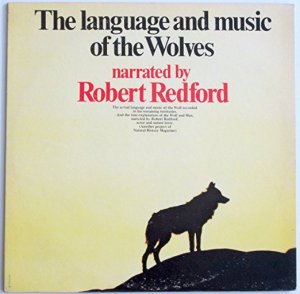 You could return the unwanted selection, but that was a hassle, especially when both parents work and the kids are always underfoot. This particular month’s record was “The Language and Music of the Wolves,” narrated by Robert Redford. It was 1967, and he was just hitting it big, but I’d never heard of him. I couldn’t understand why they didn’t get someone famous to narrate the tale of the wolves.
 There’s one part of the dream that didn’t mean betrayal, but rather, hope. The white flowers. I clung to that imagery in my darkest moments and never lost hope and faith in the future.
 My World With Words
You must be logged in to post a comment.