Quote Challenge Day Two

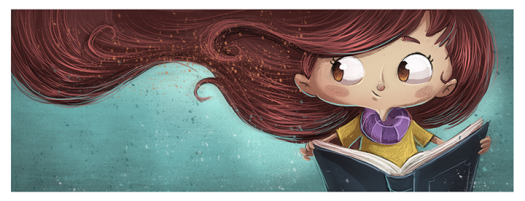
girl-reading-small

“Books are a uniquely portable magic.”
― Stephen King, On Writing: A Memoir of the Craft

About the Quote Challenge (you’re invited!):

Thank you, Dede, for inviting me to take part in this challenge. If your life has been turned upside down and you’re determined to make it good again, visit her site.

I struggle a bit with quote challenges, so this is a compromise. It’s a three-day challenge, and I should nominate three people each day to take part in the event. Choosing those select people overwhelms me. So if you want to accept this challenge, please do so!

Three quotes over three days. Thank the person who nominated you, and nominate three new people each day.


Image Credit:  © cirodelia – Fotolia

Wisdom is as Essential as Salt

“Educating the mind without educating the heart is no education at all.”
— Aristotle

“Intelligence plus character-that is the goal of true education.”
― Martin Luther King Jr.

Centuries apart, great minds came to the same conclusion. It takes more than a headful of knowledge to truly be of use in society. The one who can spout a bounty of facts may be of passing interest, but those who take those facts and put them into perspective will have a lasting impact.

Grammar police are often annoying, and with good reason. They rarely relay in any meaningful form the purpose of speaking with precise correctness. Written grammatical correctness has its place. It makes reading easier and more comprehensible. (Anyone paying attention will find errors with my writing, so no need to point that out. I know already.) And certainly speaking with clarity is a necessary skill for most of us.

turkey strut

But if I fail to properly use “whom” while I’m talking to you, or I tell you I’m “good” instead of “well” when you ask how I’m doing, you should know you come across as pompous and insecure about your own intellect when you correct me.

That kind of education, knowing proper grammar, is important. But knowing when it matters is just as important.

I have said it before and it bears repeating: the most valuable class I took in college was Logic 101.  I was fortunate. I had a fantastic professor. Today’s world of pundits and sometime fools spouting off facts on 24-hour television requires our discretion and wisdom. It doesn’t hurt to have those skills in everyday conversation, either.

If you cook, you know salt is essential for the tastiness of so many foods. Those on a salt-restricted diet will tell you that’s absolutely true. Yes, there are healthy alternatives. Wisdom is as essential as salt, and the alternative is discernment.
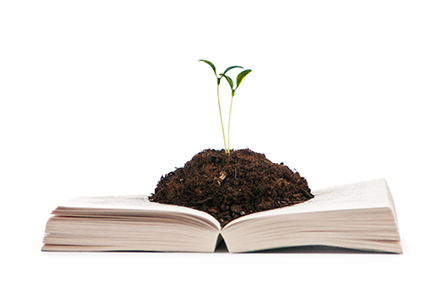
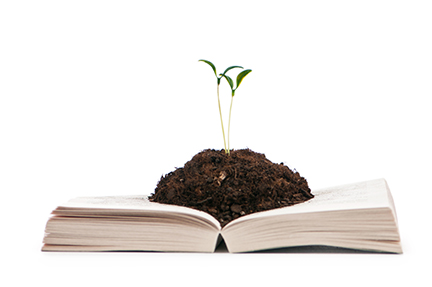
Knowledge concept with books and seedlings

I have good friends who are in education. Bonnie is one of the leaders of a state college in California, and her passion for students and learning is inspirational. As is the same spirit in so many teachers and administrators. I applaud all of you.

My cousin is working toward his masters’ in education, and plans to teach high school when he’s done. All that learning for a job that pays so little while demanding so much. Kudos to all of you committed enough to the process to pursue that highest education for the sake of others.

I hardly have to tell you educators, because you know by experience, the importance of wisdom as well as knowledge. I remember the wise words of my freshman English teacher, who’d throw those thoughts out almost as an aside, better than I remember the vocabulary tests we took each week. It’s forty years later, and they have helped shape my life.


Photo Credits: (rooster) © Tsomka — Bigstock; (book with plant) © Elnur — Bigstock


Learning

Education for Education’s Sake

I have what some would call one of the most outdated degrees available today: news journalism, formerly called print journalism. We were groomed to work for newspapers.

I’m gueNews text on typewriterssing current journalism majors get a good dousing of social media education as well, but the reality is, by the time today’s graduates with any sort of journalism degree are my age, their degree will also be outdated.


Which leads to this question: why do we go to college if everything we learn, all the knowledge we gain, becomes yesterday’s news in light of greater innovation, broader (or narrower) thinking, changes in what the workplace values?

Because education in and of itself has value.
book and background Graduation
I went to college twice. The first time I dropped out before graduating, something, quite frankly, I’ve never really regretted. I got what I wanted out of that experience, and if I had graduated, I never would have gone back and completed my education in a field for which I was far better suited.

It wasn’t easy, however, to go back, and when I dropped out, I had to explain my decision to several people in my life who knew that would be the case. Some understood, some did not. One friend was more upset than most, and when I told him I simply couldn’t pursue a degree in something I had no interest in vocationally, he asked me this: “what about education for the sake of education?”

The fact was, it wasn’t a well rounded learning experience at that college to start with, at least, not for me. Turns out that’s true at many colleges and universities. But he was right about the inherent value of education.

Today I no longer work in any field remotely related to my degree, yet having an education is an essential part of my success. You can tell the college graduates from the rest. Even those self-taught individuals, those who know lots of facts and can win any game of Trivial Pursuit, don’t have the polish that comes from the college experience. It is education; it is the process of learning, of deeper thinking, of using logic and research to reach your own conclusions that changes you.

Education for education’s sake.


Newspaper


Photo Credits: (typewriter) © GraphicStock; (Graduation Day) © carballo — Fotolia

Help for Helping Your Kids With Math

There’s one blog I follow that stands out from others in its purpose, and for parents of elementary school children, it can make an important difference.

You’ll find creative ways to make learning about math FUN for you & your kids. Which isn’t always easy.

The blog is How I Help My Elementary School Children With Math, and the woman who writes it is pursuing her Master’s in Math Elementary Education. She knows what she’s talking about, and is passionate about it.

She also has two children, ages 4 and 7, so she’s got some practical experience in this as well. And she’s darn nice.

Math is important, and a lot of kids struggle with it. What’s more, many parents have difficulty helping them. This blog can help everyone find ways to look forward to learning about numbers.

As a child, I was lucky. My dad was a math major in college and he also was a good teacher. Yet even I had hard time learning the basics. So I appreciate any tools for this key subject.

Check this blog out. Check out a number (pun intended) of the posts. Let your friends with elementary school children know about it as well!

Math is Cool, and Math is Important!


Image credit: © Gstudio Group – Fotolia

teach me to ponder

“You study, study, study, and at the end, you are lucky enough to discover the greatest gift of education: that you know nothing at all.” — EJ Koh

I’ve heard this thought, expressed one hundred different ways, a thousand different times since I’ve left college. It rings true if you’re an honest student of your chosen profession, assuming, that is, your chosen profession requires any depth of knowledge for expertise.

keyYet there are those who never cease to set themselves up as ultimate experts. I know one man who relies on Wikipedia for all knowledge, and we laugh at his “degree” from the “university of Wikipedia.”

It’s not my intention to disparage the information you can find there, because I reference it myself frequently, but it’s not always balanced and is rarely complete. It doesn’t even claim to be. It is, after all, an encyclopedia, and that’s a center of knowledge best known for abstract pieces of truth that ultimately teach you nothing.

A quality education, therefore, is not what you learn, but how you learn it. The value comes from leaving not with a packet of notes, but a mind that discerns and questions. The source of your knowledge is not your textbooks or reference material provided by a single professor, but by the world of information available to you.

If I had only one course to take in college, it would be Logic, for that was the course that taught me to think and sort through the drudge and mire that surrounds so much of the information out there today.

A pile of information makes you an interesting, albeit limited, conversationalist. The ability to discern makes you a greater mind than most.

Photo Credit: © Denis Razumnly — Fotolia.com