Everyday Value

My neighbor died today. Her granddaughter found her on the floor at home, apparently dead of a heart attack.

Her little dog was frantic, as you might imagine, and the granddaughter is taking the pup home for now. She told me she hopes one of her cousins will take him in as she’s due any day with her first child and doesn’t need the additional burden.
maple branch rev c milavas sm shadowThis lady was nice, with a wry sense of humor and countless grandchildren who took advantage of her. The police were at the apartment keeping them out; they all insisted they had things they owned in that apartment, and likely some did, but at this point under the law it all belongs to her and her estate.

I suppose the police would need to wait for the locks to be changed, because you can bet those kids all had keys. This wasn’t an entirely bad group, but one or two were pretty awful. One young man came to my door early on asking for the passcode to my wireless account. When I refused to give it to him, he broke into my apartment and got it off of the wireless box. Of course I changed the passcode and now he’s in jail for breaking & entering as well as felony theft. In my state, you serve time for theft of services.

Now, mine wasn’t the only apartment he broke into; I didn’t report the crime until the police came to me. And I shouldn’t say he broke in, although legally it was B&E. I’d left the door unlocked when I went to get my mail and he ran in then. Creepy. I lock the door now even when I take the garbage out.

But I don’t hold it against my late neighbor. I liked her. She did her best and I know she was struggling financially, or she wouldn’t have been living in these apartments. She didn’t own a car, in fact, she maybe didn’t even drive. She was disabled and couldn’t walk in a straight line very well because of the way her body was twisted. I’m not sure her vision was very good, either.

It’s funny the impact virtual strangers have on your life. I don’t know this lady’s name and I never had much of a conversation with her, but I appreciated her as a neighbor. She was kind and courteous. She loved her grandchildren, and despite what I’ve said so far I’m sure most of them are good people, young, perhaps, and a little thoughtless, but they will miss her. The granddaughter I saw today certainly seemed genuinely upset.

Smileys c Stuart Miles - Fotolia

We wonder about the impact we have on others’ lives, and it can be as simple as being a good neighbor. Earlier this week I was walking into the grocery store and smiled at a woman approaching from a different direction. She smiled back, a genuine, friendly smile that made feel good. I’d been having a difficult day. It made a difference.

“Thank you for smiling!” I told her.

“And thank you for smiling, too!” she said back cheerily. I felt good the rest of the day. That woman is important to me in that small way.

If ever you are feeling unimportant, if ever you wonder your value in life, it is there. It is in the small things and the grand, for life is made of all those things.

But mostly the everyday things.

Image Credits: (Leaves) © milavas — Fotolia; (Smileys) © Stuart Miles — Fotolia
If Only By Example

One of the legacies that has carried from my great-grandparents to me was a respect for all people. All people.

My mom’s cousin, my great-aunt’s son, was as white as I am, a heritage that traces back, some of it, to New York in the 1790s, and from there we aren’t sure which European country our ancestors emigrated from in their search for a new life.

Anyway, he was raised without prejudice, meaning, it didn’t exist in his world.

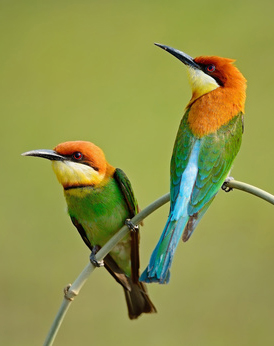
Chestnut-headed Bee-eaterThen he married a Hawaiian woman. By this point, Hawaii was a state in our nation, and had been for more than a decade. She was as American as he was. But they weren’t allowed in some restaurants because she was Hawaiian. That was how they worded it, even. Now I don’t know anything more specific about her ethnic background; I’m guessing it may have been Filipino. I was a little young, so to me, she was Lena, she crocheted beautiful purple vests for me and my sister, and she served us 7-Up when we visited.

It was a shock to my mom’s cousin to see his wife treated in such a humiliating manner. He was an intelligent, educated man, not generally naive, but this was foreign to him. I’m proud to be related to someone for whom prejudice was that unknown, and I hope the heart of that nature can be found in me.

I know the people who follow my blog by and large are people who respect others, who empathize with anyone in pain, and who ache for the hurt of those who are persecuted, even in our country, by those who should know better. So I’m preaching to the choir and saying thank you at the same time.

I don’t know what it’s like to be black, Mexican or Muslim, or any of the other minorities treated so poorly by so many these days. I stumble and fumble in my efforts to understand the humiliation and anger, and every once in awhile something gets through.

A few years ago I was listening to a woman speak at a conference for those who worked with people with disabilities, as I did at the time. She has disabilities herself, is black, and was a prominent figure in Washington D.C. some time back. I apologize I don’t remember her name. At the end of her speech, I was surprised to hear her say when she’s asked how she wants to be identified, as an African-American, a woman, or a person with disabilities,  it’s African-American first.

It put something into perspective for me. When you’re white, you don’t identify yourself by race. It isn’t an issue. When you’re black, it’s an issue every single day. Of course race is first. I’m embarrassed now it surprised me then.

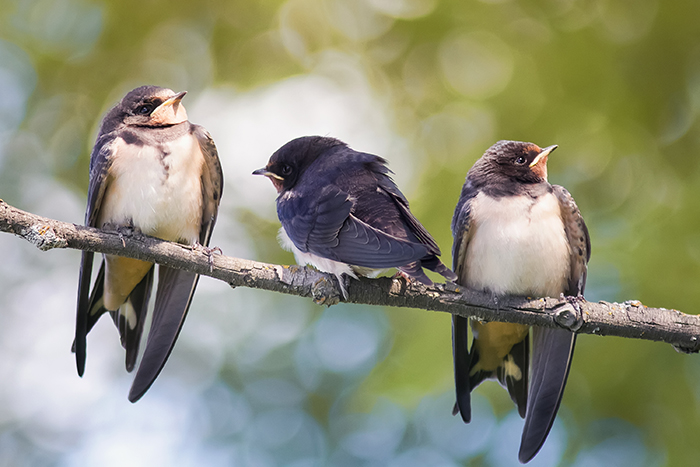
young swallows sitting on a branchA friend of mine, who’s black, bought a very nice camera, and was struggling to get the settings right so he could take decent pictures of his family. Why? The default settings are for caucasian skin. It says that right in the manual.
I live in an apartment complex with a large Hispanic population, and many of my neighbors speak little English. For my part, I speak little Spanish, but I do know these two words: los gatos. The cats. One of my neighbor ladies was delighted at my response when I caught her once speaking, in Spanish, to my two cats as they sat in the windowsill. Embarrassed, she stopped, but I said, “It’s okay. Los gatos hablamos espanol.” I have no idea if that’s grammatically correct Spanish, but she understood me.

She’s probably my age, maybe a little older, and who knows when she moved to this country. Likely it was as an adult, and likely she’ll never know a lot of English. I had ancestors like that who came over from Poland, and they faced their share of prejudice. Even my dad experienced the mockery and disdainful attitudes a notable amount, and I grew up hearing Poles and Italians were invariably less intelligent. You’ve all heard that sort of thing before, and you get my point.

To my black friends, Hispanic friends, Indian, Middle Eastern, Asian, and any ethnic group I’m forgetting friends, I see your race, religion, ethnicity, and anything else that clearly identifies you as you. I don’t always know what it means. I don’t live it. But I respect it as part of you, and I will do what I can to teach others to do so as well. If only by example.

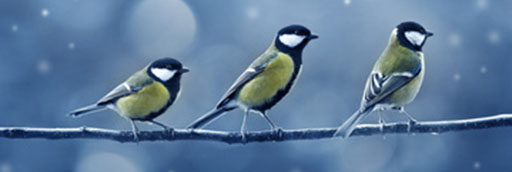
three titmouse birds in winter


Photo Credits:  bee-eaters © : panuruangjan — Fotolia; young swallows sitting on a branch © nataba — Fotolia; three titmouse birds in winter © Vera Kuttelvaserova — Fotolia


the truth is in there somewhere

It isn’t easy to dispute popular opinion, especially when that opinion is idealistic. Yet those are the concepts that need delicate dissent to understand the balance to the idealism. the pitfalls to the practice. Often, popular opinion fits the era it grows in and goes out of style as the environment changes.

Shine a light on it VPopular thought can be confusing, and become useless. It’s learning to discern the core of truth behind the thinking that’s important, and forget the fluff others will use to distort the issue. When you get down to the foundation of a belief, everything you hear about it becomes easier to sort through.

That’s when you start the debate, the discussions, the conversations with those whose heart is turned to helping you. You’ve created your own basis for belief and can build on it through the wisdom of others.

It’s also the time when you look at that core belief critically. Take a step back and think, “if everyone told me this was a lie, would I still believe it was true?”

At that point, of course, you’d have to consider why they might think it was a lie. Always good to play devil’s advocate with your own thinking. If you don’t do it, at some point someone else will, and it can get really messy if you’re not used to it.

There are multiple reasons for deeming something true, and we each have our own tolerance for these various ways. Experience, science, faith, because your parents told you so are some of them.

Just for the record, hearing it repeated as a fact on a sitcom, or any form of mass entertainment, probably isn’t a good basis for belief. In fact, anytime you hear someone state something that’s clearly intended to evoke a reaction, consider whether the reaction is most important to them, or the response. The motivation behind words is important.

Generations have survived the time & tide of trendy thinking, parental influence and bad polling. Anytime someone gives me a ten- or twenty-word conclusive summary, or worse yet, pithy quote, of their philosophy about an important issue, I consider it worth a penny for every word. Abbreviated comments shouldn’t summarize a belief. They should launch it.

Intriguing debate, courteous disagreement, and the discretion to know when to walk away, literally or figuratively (and sometimes it takes the bigger person to do it only figuratively) help hone thoughts and ideas. A word of caution, don’t act like you’re willing to die for your beliefs unless you actually are, and decide ahead of time what those beliefs might be.

How did I come to these conclusions? I took my own advice, and this is what I’ve come to believe.

Image Credit: magnifying glass © mudretsov; script © orelphoto both — fotolia.com

hold your child’s hand, talk a little longer

Last week, our hearts were broken.

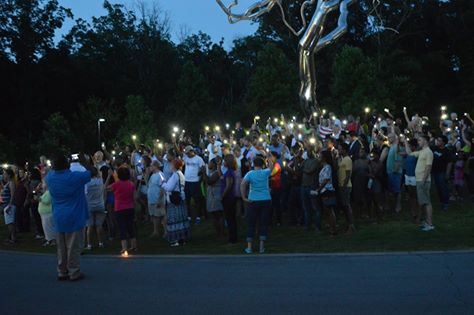
In response, my friend Wanda organized this silent vigil in our community for the victims of the Emanual AME Church shooting.

Silent Vigil at Crystal Bridges Museum
Silent Vigil for Victims of Mother Emanuel AME church shooting, June 24, 2015. Photo by Ali Wingood

Wanda has two daughters, ages 12 and 14. They’re learning what it means to be black in America. They’re black, so there’s that, and then there’s the bigger picture Wanda is helping them understand.

More to teach everyday, no doubt. It’s hard to be a parent.

In November of 1960,

Ruby Bridges made history. Many of you know the story. Six-year-old Ruby was one of the first black children to cross the lines at an all-white school in New Orleans to claim her right to an equal education in the public school system.

U.S. Marshalls with Ruby Bridges, November 14, 1960

U.S. Marshalls escorted her & her mother to the classroom that first day amidst rioting protesters, including one woman who put a black baby doll in a makeshift casket and shoved it at Ruby as she walked by.

Ruby was brave, no doubt about it. But when I saw this picture all I could think was how much courage her parents had, how deep their conviction and love must have been.

Her mama probably didn’t sleep much the night before. She likely ironed and starched that dress until it could stand up by itself. There may have been a petticoat, given the same care.

The little white anklets, perhaps with flowers embroidered on them. The patent leather shoes, polished until light bounced off them at every step. The bow pinned firmly in the hair.

When I picture Lucille Bridges, I see a woman who believed in what she and her baby girl were about to do. Ruby was going to shine, inside and out, as she changed history.

And she did change it. Today, countless doors have been opened for children everywhere, and each of us has benefited at one point or the other from the education they’ve earned.

All in my lifetime

Ruby’s story never would have happened if it hadn’t been for Abon & Lucille Bridges, her parents. I wouldn’t care so deeply if not for my parents, who raised three children in the turbulent ’60s and taught us about equality and justice as best they could.

We stumble through, work together and listen to each other.

That’s all anybody can expect, to teach the best way — and words — we know. Perhaps down the road we learn our lessons were somehow off the mark. Yet we stumble through, work together and listen to each other.

I’ve kept my heart, mind and eyes open for increasing understanding because of the foundation my parents laid. Whatever mistakes they may have made, at its heart, their message was right. They believed in equal opportunity. They saw people as individuals with value. They recognized the problems and knew the solutions were bigger, but would take time.

It’s hard to be a parent, but you make a difference. May it change your child’s world, and that of those around you, for the better.

Thanks to the Ruby Bridges Foundation, rubybridges.com, for facts on her story.